Personal Reflection

QUIET HERO

Author’s Note

Caring for your aging parents is emotional and challenging.

I faced my fears with cancer, but it was nothing compared to the fear my mother had to face alone, without my father.

My mom was 78 when my father passed away. She went on to live a personal journey, emerging with a fresh start and liberating freedom.

My mom was the inspiration behind the next story. When my dad passed away, I thought the hardest part would be my own grief.  But what I didn’t expect was how deeply I would feel my mom’s loss, now that I am approaching her age when my father passed away — and how much I would learn by remembering her quiet strength.

“Quiet Hero” is about a journey of post-loss, a second life. It is a fictional story that captures the emotional weight of deep loneliness and emptiness, and echoes the “aha moment” of independence.

“Quiet Hero” is a tribute to my mom's quiet courage.
©2025 Myrna Urmanita. All Rights Reserved.

Quiet Hero

Belinda moved about her kitchen listlessly. She prepared the morning coffee with a monotonous routine. Every morning, she moved on autopilot, like the coffee machine clicking on without thought. She was stressed to the hilt caring for her aging mother.

“I don’t know what to do with Mom. She’s struggling with the idea that she is all alone,” Belinda confided tearfully to her best friend and confidante, Chula, her little chihuahua. Chula cuddled against her and nudged, as if to say she was heard.

The hardest part of losing her dad wasn’t Belinda’s own grief — it was watching her mother try to navigate life without him.

Belinda remembered vividly the anxiety that overcame her — not so much from her father’s painful struggle with cancer, but from seeing fear slowly take over her mother.

Those words echoed in Belinda’s ears. Every time she saw her mother, she was greeted with the same refrain of sorrow.

“What am I going to do? I can’t do this by myself. Why did he have to go?” her mother cried, trembling.

Day after day, it grew in her voice, in her eyes, in the way she moved through her world — uncertain and alone. She was quietly unraveling as she contemplated life without the man who had stood beside her for over sixty years.

It was hard to watch her talk with well-meaning family and friends who tried to comfort her.
“Give it time, you’ll be fine. It’ll get better, you’ll see.”

Belinda was guilty of saying those same words. Yet deep down, she knew better. Her own relationship had crumbled after only six months, and she still remembered the emptiness, the weight, the black cloud of loneliness that lingered. If it was that hard for her to recover, how much more devastating must it be to lose someone you’d spent a lifetime with?

Through that lens, she felt her mother’s heartbreak even more deeply. Belinda’s relationship may have ended in sorrow, but he had simply walked away — still alive, still existing somewhere in the world.

Her mother, though, had suffered an irreversible loss — a spiritual departure. There would be no phone call, no chance meeting, no second chance. Her grief was deeper, sharper. It belonged to another realm. Her heartbreak tormented her. The fear of facing life alone was real and raw.

There were no reassurances. “You’ll see him again soon.”

Death is final. And Belinda’s mother knew all too well — this was the end of the road. The life she had built with the man she loved for sixty years — the rhythm of their days — was over. She was left to begin again, and she was afraid.

Belinda comforted her mother again and again, but words fell on deaf ears.
“Go ahead, Mom — cry your tears. It’s okay.”

Belinda’s thoughts made a promise to her mother: Let your sorrow flow over you, Mom. A new version of you is waiting to emerge. You will step into a new journey, in a new house, in a new town, creating a new life. I promise you your family will be nearby and be there for you. But the world will never be the same without Dad, and I know it’s not going to be easy to start again alone.

“Please, Mom, I know you can do this,” she said, clasping her fingers tightly around her mother’s disfigured, arthritic hands.

“We’ll do this together,” she whispered, kissing her mother’s forehead as if sealing a promise.

Belinda often wondered if she could have the same resilience, perseverance, and strength her mother had. After six decades together, it’s not just about losing a partner — it’s about losing a piece of yourself.

Grief is more than sorrow; it’s the struggle to be whole again, to learn to live as an individual. It’s about rebuilding your identity when so much of it was shared.

“Am I as courageous as Mom?” Belinda asked herself, reflecting on her own broken relationship.

Belinda kept her promise. She and her siblings were there for their mother until she passed away. Their mother went on to enjoy her newfound independence for over fifteen years after their father’s passing — on her own, in a new home and a new town, just as Belinda promised.

She realized just how strong her mother truly was. Sixty years with one person — that kind of bond runs deep.

She’ll never forget the pride in her mother’s voice:
“I’m strong. I knew I could live my life by myself after your dad died. I found this house, moved in, and now I’m living in it. My friends couldn’t do it, but I did.”

Her mother had proved her strength not only to family and friends, but to herself. She revealed an inner warrior — quiet but unshakable.

There is no doubt in Belinda’s mind that when her mother crossed over, her father was there to greet her with open arms and a whisper:
“Welcome home, my quiet hero.”

Some things that take courage are unseen. Others reveal themselves in time.
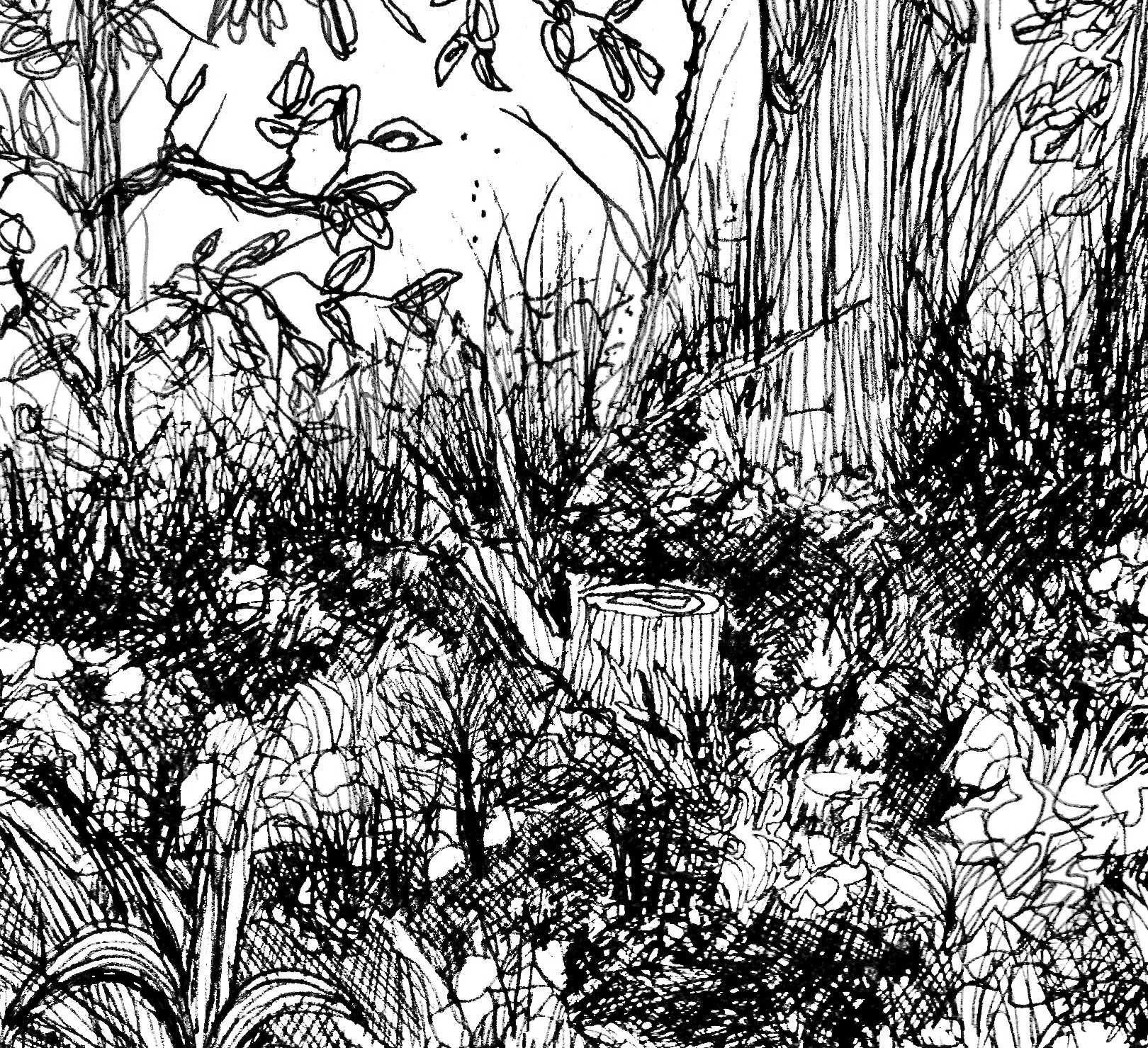
THE GARDEN

Author’s Note

Just as adversity challenges us to discover hope, renewal, and beauty, memories and present actions encapsulate and embrace gratitude, connection, and a lingering sense of hope. 

When I approached writing this story, I wanted to capture the intimate human experience — that connection and bond between memory and place — physical space as a reflection of a person’s life, and the impact of moments filled with sensory details.

My father passed away over twenty years ago, but his memories still visit me from time to time. “The Garden” is a work of fiction inspired by my experience at a significant turning point in my grieving journey with my father’s passing.

This is a tribute to a father's love and the lasting impact on his daughter and family.

©2025 Myrna Urmanita. All Rights Reserved.

The Garden

Akira poked her head through an opening in the blanket, and bitterly cold air slapped her warm face. She quickly dropped back down into her soft pillow.

She felt Momo's wet nose nudging her feet.

 "Get up, Momo," she yawned. Momo ignored her, burrowing deeper under the sheets.

Another Saturday. Every Friday afternoon, Akira packed up Momo and drove to her Mom’s house, and every Saturday morning, they woke up in the same cold, stuffy guest room.

Before her father passed away, Akira promised to watch over her Mom. Her parents were together for over fifty years. Her father did everything for her mother—and Akira worried about how she’d manage.

Suddenly, Momo hurled off the bed and, with a thump, her short, stubby legs landed on the carpet. Akira jumped up, scooped her into her arms, and dashed down the hallway.

Hesitating at the sliding glass door, she glanced down at her bare feet.

"I forgot my slippers," Akira shrieked.

She stepped onto the icy concrete—sharp needles pricked her skin. A chill crept up her legs, freezing her in place. 

Excited, Momo wriggled free from her arms, scurried into the bushes, and vanished into the mist. Akira's father's garden was her playground. She loved exploring every corner, patrolling like a little guard dog.

The garden was Akira’s father’s sanctuary, too—a quiet space where he escaped. He had a gift for nurturing plants, pouring his heart into every tree, flower, and vegetable.  

His passion was rooted in his childhood back home in Japan, where he studied horticulture. A proud immigrant, determined that his family learn English, become citizens, and get an education. 

He retired as a county landscape architect. Diligent and resourceful, he upcycled materials long before it was trendy, building everything from scratch—from drip systems to greenhouses. 

As an art student, Akira remembered the wooden Pochade box her father had made for her. She rarely used it. It was a gesture of support, but it was too heavy for her to carry on her steep walks up to campus. It reminded her of his unwavering belief in her, even when it became a bitter reminder of her self-doubts, hesitations, and fears.

Remembering these moments, she spotted one of her father's work gloves on the ground. She picked it up, and a wave of sadness swept over her as she looked around. 

The garden, once vibrant, was sad and lifeless. She felt the loneliness creep in as she walked. The fruit trees, once proud and abundant, now leaned sadly, crippled by the relentless winds.

Akira ran to the garage, grabbed burlap sacks, and covered them as her father used to. Her fingers, numb and frozen from the cold, she struggled against their fragile limbs. 

“I miss him too,” Akira whispered.

She pushed down on the worn and splintered stakes, holding them up, and secured them as best she could. 

The earth was soaked with rainwater and filled her nostrils with a musky scent. As she stepped carefully, the sticky mud hugged her sinking feet. The mud squishing between her toes tickled, and it gripped tightly onto Akira's feet as she struggled with all her strength to lift her legs and pull free. 

"I feel like a kid again," she cried out, giggling, as she splashed her feet in the rain puddles.

Turning around the bend, Akira saw the bamboo trellises her father had built that once stretched toward the sky, now collapsed by the storm. The vines hung unsupported and defeated. She leaned and reached out to a lifeless vine, catching it as it dropped into her hand. 

“I’m so sorry. I wish he were here too,” she murmured, cradling it gently.

Near the concrete patio, she almost slipped on a puddle of water. The hose, twisted and lifeless, was spurting water from its ruptured underbelly. She carefully untangled it, and as she rolled it back onto its rack, a splash of cool water spurted from the nozzle and washed the dirt off her hands. 

Walking away, she turned to the hose and mouthed silently, “Thank you. I miss Dad too.”

Akira approached her father's tool shed; the stale, familiar scent transported her back to childhood. It was comforting, like a familiar blanket. Inside, she looked around in awe. The shed was a treasure chest, filled with gardening boots, tools, and her father's DIY handiwork — only he could understand.

Stepping outside, she took a deep breath and closed her eyes. She could hear Momo scampering on the gravel path.

That’s when it hit her—regret, gratitude, and clarity all at once. Akira never realized how much this garden had meant to her father—how much it had given him purpose, peace, and pride. He didn’t just plant things. He created.

“Dad’s gone,” she murmured shakily. The weight of that realization settled in her chest heavily.

But wherever she walked, whatever she touched—he was there. She felt his love, his energy, his joy tucked into every corner, every fruit tree, every vine, every mud hole, and every garden hose. This was no ordinary garden.

Just as she poured her heart into her art, her father poured his passion into his garden. This was her father’s masterpiece, his art gallery.

Feeling renewed, Akira lifted her face to the sun breaking through the clouds. She stretched her arms high toward the sky and waved her fingers into the light.

“Thank you, Dad, I get it!” she cried out excitedly.

Suddenly, Momo appeared, racing toward her. Surprised, Akira quickly bent down, scooping her through the air.

Momo barked as she twirled her high, paws outstretched to the sun. Akira laughed, breathless and free, and the garden answered—a chorus of leaves, wind, and memory—her father’s presence in every note.

Some things grow and begin quietly—patience shows what will bloom.

WISDOM HAS NO EXPIRATION DATE

Author’s Note

My next piece is not a story, but a reflection I felt deeply compelled to write.

Now that I’ve reached the age my parents were when they needed more help, I can’t help but admit how right they were about so many things they once tried to tell me.

“I get it. I understand.”
I find myself saying this often now—and I mean it.

When I look in the mirror, I sometimes see my mother’s face looking back at me. And with that reflection comes the realization of how much I once overlooked—about her, about my father, and about how often I stopped truly listening to them.

What goes around comes around. The cycle continues.

I no longer have to imagine how my parents may have felt—unseen, unheard, or quietly dismissed—despite the lives they lived, and the lessons they carried and tried to pass on. I know that as parents, we have all experienced those same feelings with our own children.

“Wisdom Has No Expiration Date” is not a complaint, but an invitation—to every generation—to pause, to listen, and to understand anyone, at any age, who comes forward to share a story, a thought, an idea, or simply a moment of connection.

It is about human connection—A reminder of our shared humanity—and a call to offer sensitivity, compassion, and kindness to one another.

©2025 Myrna Urmanita. All Rights Reserved.

Wisdom Has No Expiration Date

Having lived as long as I have, I belong to the older generation. We are the Baby Boomers, born 1946 - 1964. Our parents are the Greatest Generation, born 1901-1927, and the Silent Generation, born 1928 - 1945. 

We are the children who have lived through an extraordinary spectrum of personal, cultural, and historical changes. And yet, we are also the generations that have earned a quiet frustration: watching younger generations assume we have little or nothing to offer to the problems and issues facing the world today.

Never mind that we were the generations who carried responsibility, loss, reinvention, failure, recovery, love, and survival. We are the children whose parents lived through the Great Depression, fought in WWII, and some of us are the children of parents from the post-WWII baby boom.

We are the generations who lived through the Great Depression, World War II, the Cold War and Space Race, political turmoil and assassinations, the Civil Rights movement, the Women's Liberation movement, the gay rights movement, the environmental movement, the counterculture/hippie movement, the Vietnam War, Middle Eastern conflicts, the Persian Gulf War, and early post-9/11 operations, the rise of the Internet, and the digital revolution.

And still, our words are dismissed for carrying no weight or value. We become unseen in a world obsessed with speed, disposability, and a more-is-better mentality.

But, here is the hushed reality they are missing:

Technology changes. 

Language changes. 

Platforms change. 

Fear, ambition, grief, hope, ego, love, and resilience do not.

The only currency with lasting value is human connection. Leadership and success have always been about relationships—about building bonds grounded in sensitivity, compassion, kindness, and humanity.

We are the generations who do not need to shout or correct, but stand firmly in our lived reality. There is depth beneath our storytelling—depth that only time can create.

We are not seeking validation. This is about legacy. Our storytelling is not about ego or praise; it is about planting seeds. Seeds for those who will one day say, "Now I get it. I understand." 

And just as the cycle repeated itself with us, it will repeat with generations that follow.

We are not late, outdated, or irrelevant. We are the generations that have been there, done that, and are arriving now with power and authority that are not fabricated, but in real-time.

We don't just want to be heard.

We want to be felt. 

And feelings are what endure.

I am not alone in this. You are not alone. Together, we are not disappearing into the background.

We're leaving a light behind.

Some things that are learned are timeless — what comes next asks me to notice more.

TRUTH UNVEILED


Author’s Note

Have you ever asked a friend—or anyone—who they think you are?

Have you ever wondered how others see you?

Do you even know who you are?

A friend asked me that when I was going through cancer. During our conversation, we spoke about our purpose in life. That’s a question that visits you when your mortality feels close.

And in the last quarter of life, it comes up more often than you expect.

The only way I could answer it was to know who I am—what I love, what matters, what gives my life meaning. Without meaning, there is no purpose.

“Truth Unveiled” is my story.

My reflection of who I am.

My quiet truth.


©2025 Myrna Urmanita. All Rights Reserved.

Truth Unveiled

Having cancer changed my life. Everything that once mattered no longer did. My old life was stripped away, and I saw everything with a new perspective. Cancer woke me up from a deep sleep. It took me years to make it here, but it took a life-threatening diagnosis to become fully self-aware of who I am.

Being able to say, “I know myself,” is humbling and honest. It acknowledges my strengths, weaknesses, values, and boundaries — knowledge gained through reflection and lived experience.

Many people live their entire lives without ever truly knowing who they are. I have come to know myself, but not without fear, pain, and tears. Moving through them unveiled the truths that helped me better understand my character, feelings, motives, and desires.

Discovering that I am multipassionate and deeply empathetic is not something I became late in life. It is knowledge I finally felt safe enough to claim — to accept, and to have the courage to recognize. 

Looking back on childhood memories and early experiences revealed the roots of long-held patterns — my behaviors, beliefs, and values.

In my adult years, life didn't allow me to hear—there was too much noise— too many responsibilities, too much jumping through hoops, and proving my worth.

In retrospect, I approach life quietly.

I notice all its shades in slow motion. I see meanings others overlook. Life moves fast, and when it does, I feel overwhelmed — but when it finally slows, the entire landscape comes into view.

And this is where I am now — here, in this space. This is not merely an art and writing platform; it is a place of permission. For those who feel too much. For those tired of performing. For those who will one day face illness, loss, or sudden change and ask, “Who am I now?”

I know who I am. I am a survivor. I am self-aware. And I trust I will become what I am meant to be.

My truth has been shaped by confronting different perspectives of reality through reflection and the integration of life’s lessons. It comes from having lived, endured, loved, lost, listened, and learned. From that comes insight, discernment, and quiet wisdom.

But my journey is not over. I know who I am now — and I am still evolving. Tomorrow will bring another version of my imperfect self, and with it, a deeper layer of authentic truth.

When truth speaks, it comes from a place that is heartfelt, deeply personal, and genuine. It is exactly where the voice belongs — imperfect, purposeful, and honest.

My writing is my voice.

It speaks softly, not because it is uncertain. It speaks softly because it is confident enough not to shout.

And those who are ready will lean in to listen.

Some things reveal that I have arrived—I am not finished, and finally, I am willing to stay.