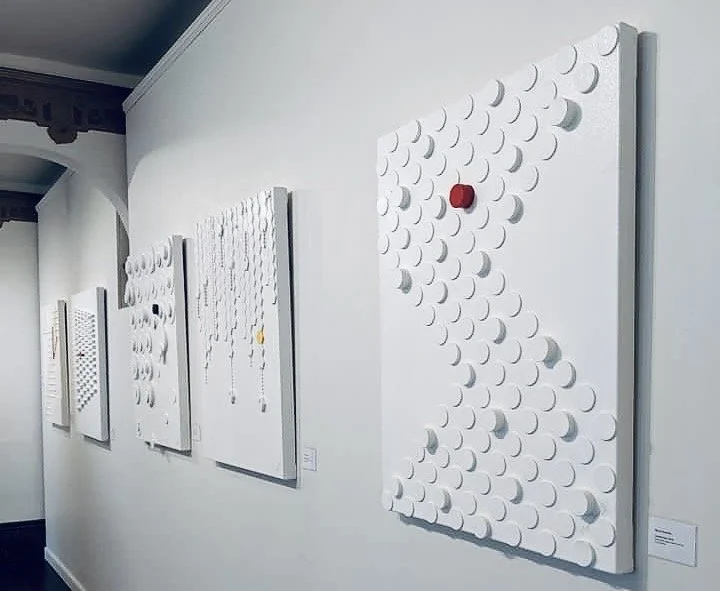
Light and Shadows
— MY RISING ACTION, THE CONFLICT, AND THE HEARTBREAK —
THE CATALYSTS THAT UNEARTHED HEALING AND UNEXPECTED BEAUTY.
I was a young art student when I first learned about the magic of light. I was fascinated by how light and shadows unveiled their truth. From that day on, I was hooked, and light and shadows were in everything I saw around me. Over time, they became the breath of my creative work. And later evolved into symbolic and literal reflections of my life journey.
In my journey, I’ve wandered many paths, but with each twist and turn, it’s not about the destination—But about faith, self-discovery, and growth with every step.
For many years, art sat quietly in my life. The daily demands of family, career, and living were all that mattered. Art was my passion, but I had to put it on hold. The dream of finding the free time to create work worthy of a solo exhibition felt impossible. It was something I buried deep in my heart and visited frequently when I was alone, gazing out the window, deep in thought.
In my later years, a cancer diagnosis turned my world upside down. But fear and confronting awareness of my own death lit a fire within me. I was determined not only to survive, but to live fully. And so, I turned to the one thing that had always brought me clarity: art. I turned to painting to process what I couldn’t say aloud. What began as therapy became a series of 12 paintings—each one telling a part of my journey from fear to strength.
I held my first solo exhibition. Light and Shadows was born—not just from my experience with breast cancer, but from my journey through adversity: walking through the darkness and the light, pain and calm, and fear and hope. With acrylic paint and everyday objects, I unveiled the magic of light, allowing it to transform simple everyday materials into metaphors of the human experience: resilience, growth, and hope.
©2019 Myrna Urmanita. All Rights Reserved.
Through gesso, paint, and everyday materials, my story is not about loss but about embracing transformation and finding strength in the process. Each painting in the series represents not only my journey through illness and treatment, but my journey in understanding myself and the world around me.
Art became my route to healing, and the creative process became a mirror for my spirit, guiding me to a place of acceptance and hope. The works created during that period are not just reflections of my struggle but symbols of the light that emerges even in dark times.
Those pieces are no longer with me, but their impact on my spirit, healing, and voice remains. Losing them only deepened my understanding: creativity, like life, is never static. It flows, expands, and heals. And even when something is lost, something greater is often found.
Through it all, I’ve learned that the journey isn’t about what we leave behind. It’s about what we discover along the way. We carry within us the treasures of faith, commitment, and resilience. When we embrace them, we emerge more vibrant, whole, and deeply connected to the beauty around us.
I invite you now to walk with me through Light and Shadows. With each painting and narrative, you’ll see where I’ve been and how light kept finding its way in.
- Painting #1 -
FIERCE GRIP
The Relentless Predator
During one of my physical exams with my doctor, I pointed to an area that felt suspiciously hard to the touch. He scheduled a mammogram for me immediately. His immediate attention and early detection helped catch my breast cancer in its early stage. I was 67 when I was diagnosed with breast cancer.
Cancer is just a word, but the very sound triggers fear. It has taken years to learn to let go and release this fear of what I have no control over.
"You have cancer."
Hearing those words gripped my heart and my lungs, and overcame me like a predator stalking its prey. Fear flowed through my veins. And today, those words still echo whispers as my yearly mammogram appointment nears. My anxiety creeps like a familiar enemy, and my mind becomes a battleground preparing for war.
I am consumed with fear and anxiety years after my diagnosis and treatment. Doctor appointments and medical settings have become anxiety triggers for me—I am consumed with apprehension, tension, uneasiness, and increased heart rate, resulting in high blood pressure readings, otherwise normal in outside settings. White Coat Syndrome is the medical term for this condition.
In “Fierce Grip,” I wanted to capture the unyielding hold that cancer has, long after the diagnosis. And, no matter how much time passes, it feels like that grip never loosens.
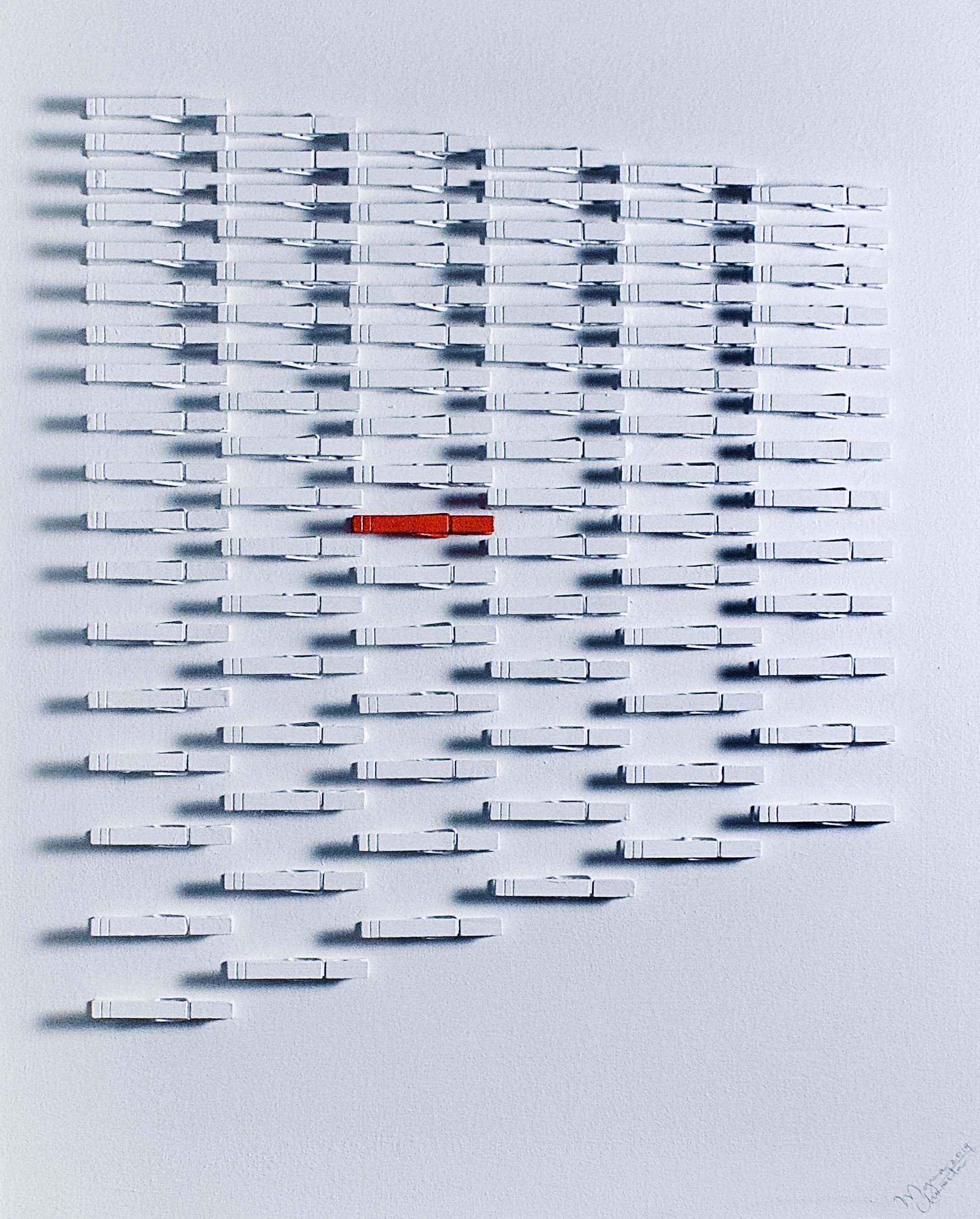
“The Relentless Predator”
Fierce Grip by Myrna Urmanita. ©2019 Myrna Urmanita. All Rights Reserved.
Acrylic mixed media on canvas. 24” x 36”. In a private collection.
I chose to use wooden clothespins, each with teeth tightly gripping sheets, fighting to free itself from the relentless wind. I wanted to capture the powerful tension within me and my fight to reclaim peace.
I intentionally set the clothespins repeatedly in rows lined up against a stark white background. The repetition symbolizes fear constantly lingering. White, symbolizing innocence, the victim—untouched and unbroken—me, before the diagnosis.
But that one striking red clothespin, standing out from the others, like a cut that keeps bleeding, is the fear that is persistent, ever-present, and lingering. The relentless reminder that the cancer will return.
My cancer was found in time—not by chance, but because I paid attention, prayed, and had faith. Early detection and faith were my grace and salvation. Maybe it's old-fashioned to have faith in a society driven by science, technology, and reason. I was raised in a different era, a post-war generation where faith was part of American life.
Surviving the grips of cancer's threats, for me, meant digging deep to find the strength to fight. Early detection was empowering—it cleared the path to effective treatment for my breast cancer. Faith was empowering—it gave me inner peace, strength, and hope.
Early detection is a scientifically proven strategy—it is critical—it saves lives. Spirituality, prayers, and faith DO NOT replace medical treatment—they provide the psychological and emotional support to help navigate the path. But it is the symbiotic relationship between early detection and faith that forms an empowering bond, providing the inner strength and hope needed for a difficult journey.
Early detection and faith were my grace and salvation. Together, they can save lives. They saved mine.
- Painting #2 -
PILEUP
Emotional Overload
During my diagnosis and treatment, I struggled to conceal a chaotic whirlwind of emotions — worry, anger, and fear that consumed me. It wasn’t just the cancer. It was everything else happening around me.
At the time, my mother was terminally ill with congestive heart failure and receiving hospice care. Almost simultaneously, my younger brother was diagnosed with terminal cancer.
The weight of it all was unbearable.
I was overwhelmed with guilt — a deep ache I couldn’t shake. My brother had young children in college. It felt unfair. He didn’t deserve this. My own cancer was in its early stages, and as a mother and grandmother, I would’ve traded places with him in a heartbeat if I could.
My mind became a relentless storm of responsibilities—arranging for daily care assistance, researching possible relocation, decluttering, packing, cleaning, and managing necessary repairs. All while trying to stay focused on my treatment and fragile well-being.
The list felt endless. My emotions were bottled up, packed tightly beneath layers of prayer and determination. I held on, hoping the weight wouldn’t crush me.
I needed to be strong — for my mother, for my brother. and somehow, for myself.
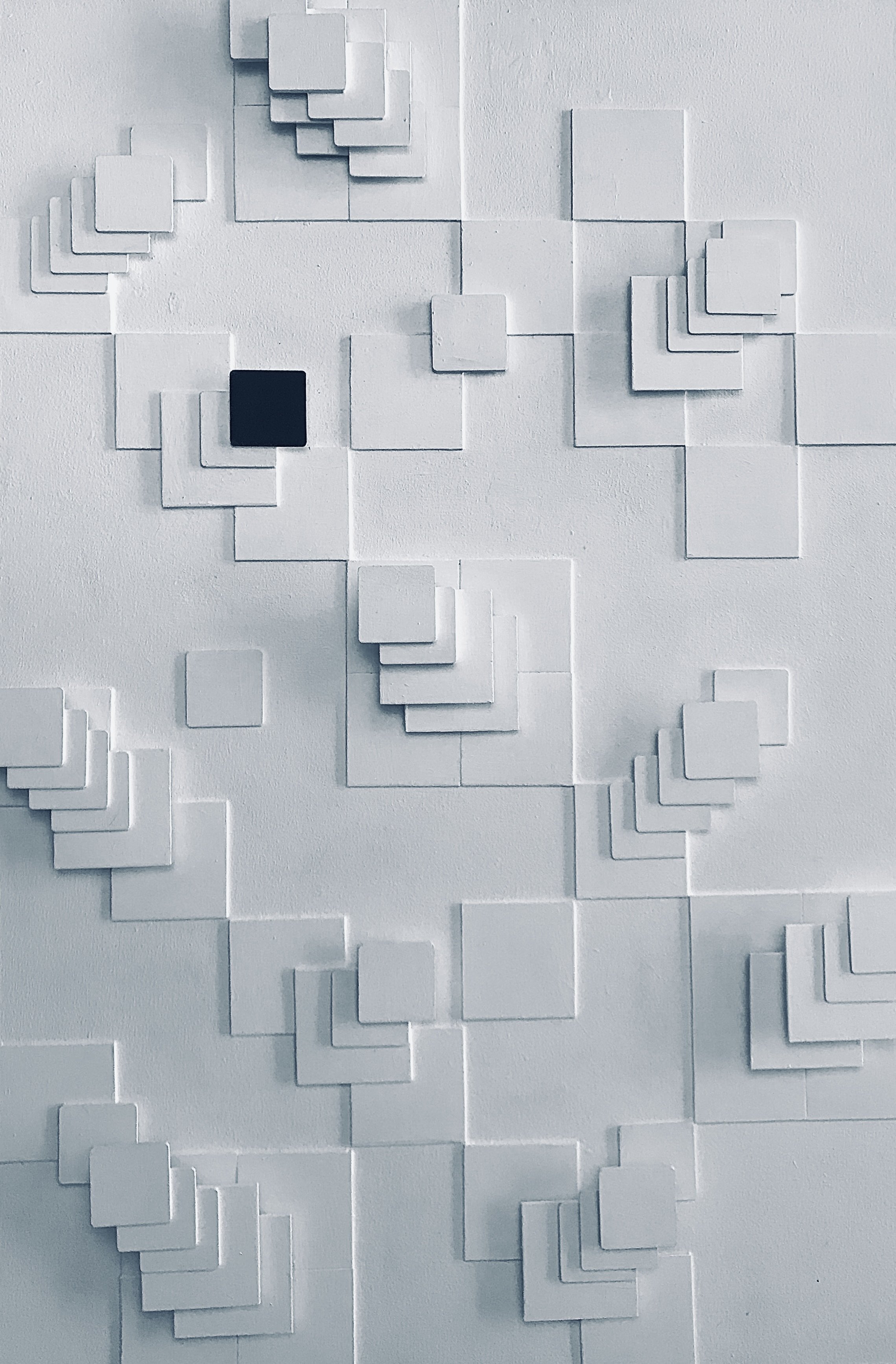
“Emotional Overload”
Pileup by Myrna Urmanita. ©2019 Myrna Urmanita. All Rights Reserved.
Acrylic mixed media on canvas. 24” x 36”. This work was regrettably discarded due to a storage mishap in 2021.
“Pileup” captures the emotional burden I carried — a visual reflection of chaos layered upon chaos, one weight stacked on another.
The deep purple in a sea of white represents the calm I had to show, even as my heart trembled beneath the surface. Purple, a blend of the peaceful blue and powerful red, speaks to the strength it took to remain grounded while concealing so much fear.
“Pileup” became my silent offering to my family. It was my shield — a gesture of protection, a way to absorb the chaos so they wouldn’t have to. I couldn’t fall apart. I had to stay calm. Resilient. Unshakable.
And although the emotional overload was huge, I poured it into this canvas — giving form to what words alone couldn’t express.
- Painting #3 -
TWISTED
Letting Go
Throughout my life, I’ve walked through many seasons. I’ve been a daughter, a student, a wife, a mother, a business owner, a single parent, an employee, a retiree—and now, a cancer survivor.
Adversity has worn many faces. And I have survived them all. But what I’ve come to understand is this: Adversity is not exclusive to cancer. It is universal. It does not discriminate. It touches every life in one way or another.
Adversity is impartial. It doesn’t care about race, wealth, age, or identity. It doesn’t consider whether we’re prepared. It just comes. And when it does, it affects every part of us—mentally, emotionally, spiritually, socially, financially. Regardless of where we come from or what we’ve built, adversity humbles us all.
Our natural response—fear. We try to regain control. We tighten our grip. We try to manage the chaos or protect ourselves from the weight of our emotions. The truth is, control is often an illusion. And peace doesn’t come from working the storm—it comes from learning to move with it. That lesson came into sharp focus for me while creating Twisted.
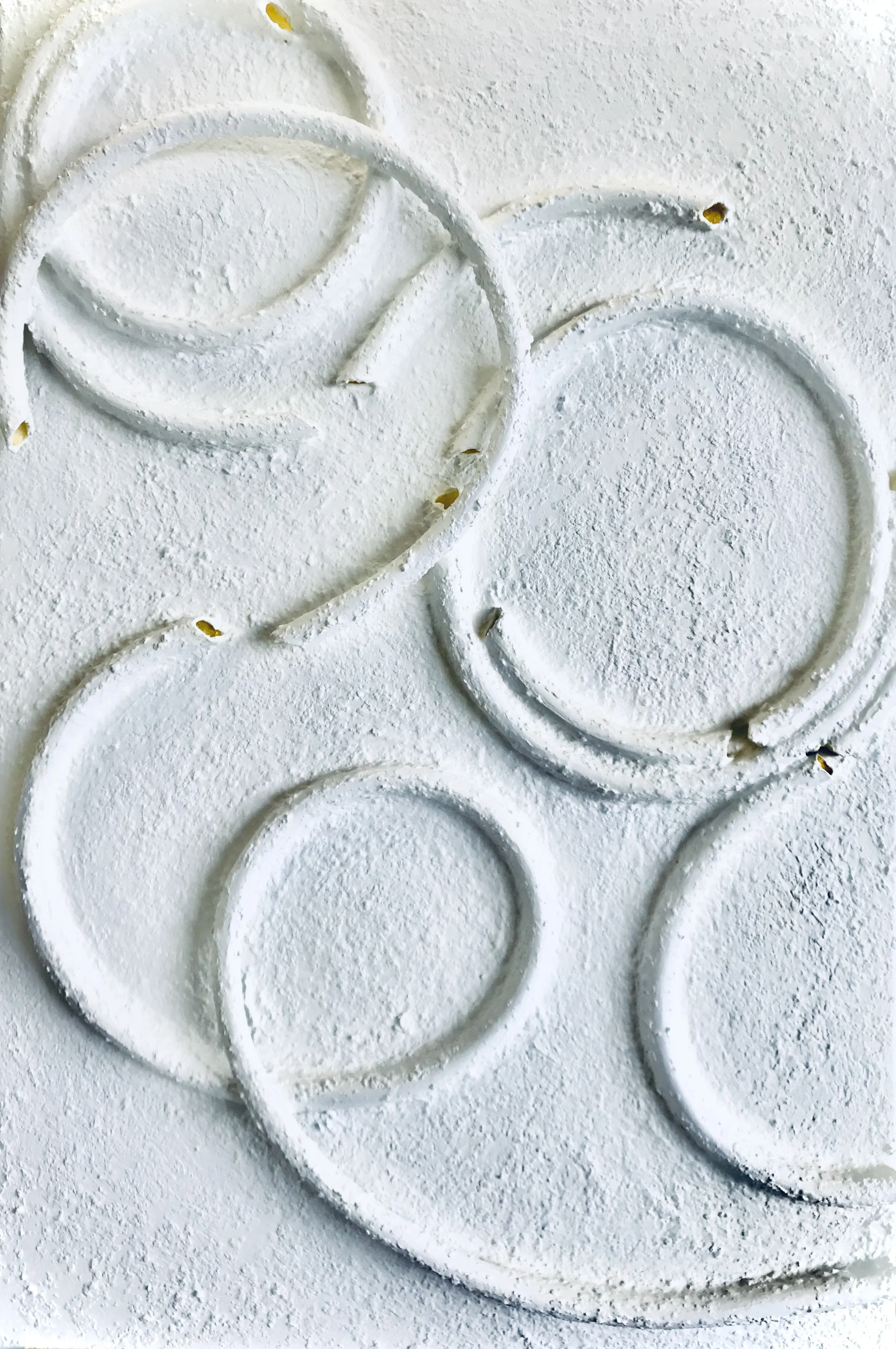
“Letting Go”
Twisted by Myrna Urmanita. ©2019 Myrna Urmanita. All Rights Reserved.
Acrylic mixed media on canvas. 24” x 36”. In a private collection.
I began the piece with stiff plastic tubing—rigid, resistant, uncooperative. I tried to shape it, to bend it to my will, but the harder I worked, the more it pushed back. The material resisted. I grew frustrated. The process felt like a fight.
But something happened when I stopped forcing it. When I let the material guide me—instead of the other way around—the artwork began to take form. It revealed itself, not through control, but through surrender.
“Twisted” is about letting go. It’s about releasing the need for perfection—loosening our grip on how things should be, and discovering that peace and freedom often come not in mastery but in trust.
In life and art, the most beautiful moments often happen not from control, but from allowing. Letting go creates space for grace.
As I continue this path of healing and self-discovery, “Twisted” reminds me of a truth I return to again and again: Sometimes, the most powerful thing we can do is surrender.
Because when we let go, we open our hearts to unexpected growth, deeper peace, and the quiet unfolding of something more beautiful than we could’ve ever planned.
- Painting #4 -
RING TOSS
Cherish the Simple Moments in Life
Any kind of illness is scary. It’s a stark reminder of how fragile and fleeting life can be. We spend so much time worrying about things that, in the end, don’t really matter. We forget to appreciate the small, precious moments—the ones that make life meaningful.
We live as though we’re indestructible—until we’re not.
And in the wake of fear, we often find ourselves called to live more fully, to seek out richer, more intentional experiences. Yet, no matter how much we strive or plan, tomorrow is never promised.
When I began working on “Ring Toss,” I found myself holding old wooden rings—and suddenly, I was transported back to childhood. Long-ago summers at the county fair with my mom, dad, and siblings. Sticky fingers, warm breezes, bursts of laughter.
And even more vivid were the memories of my own children—small hands clutching colorful rings, giggling as they played the game. Those simple, joyful times are so precious to me now. I realize they’ve always been about something bigger: gratitude.
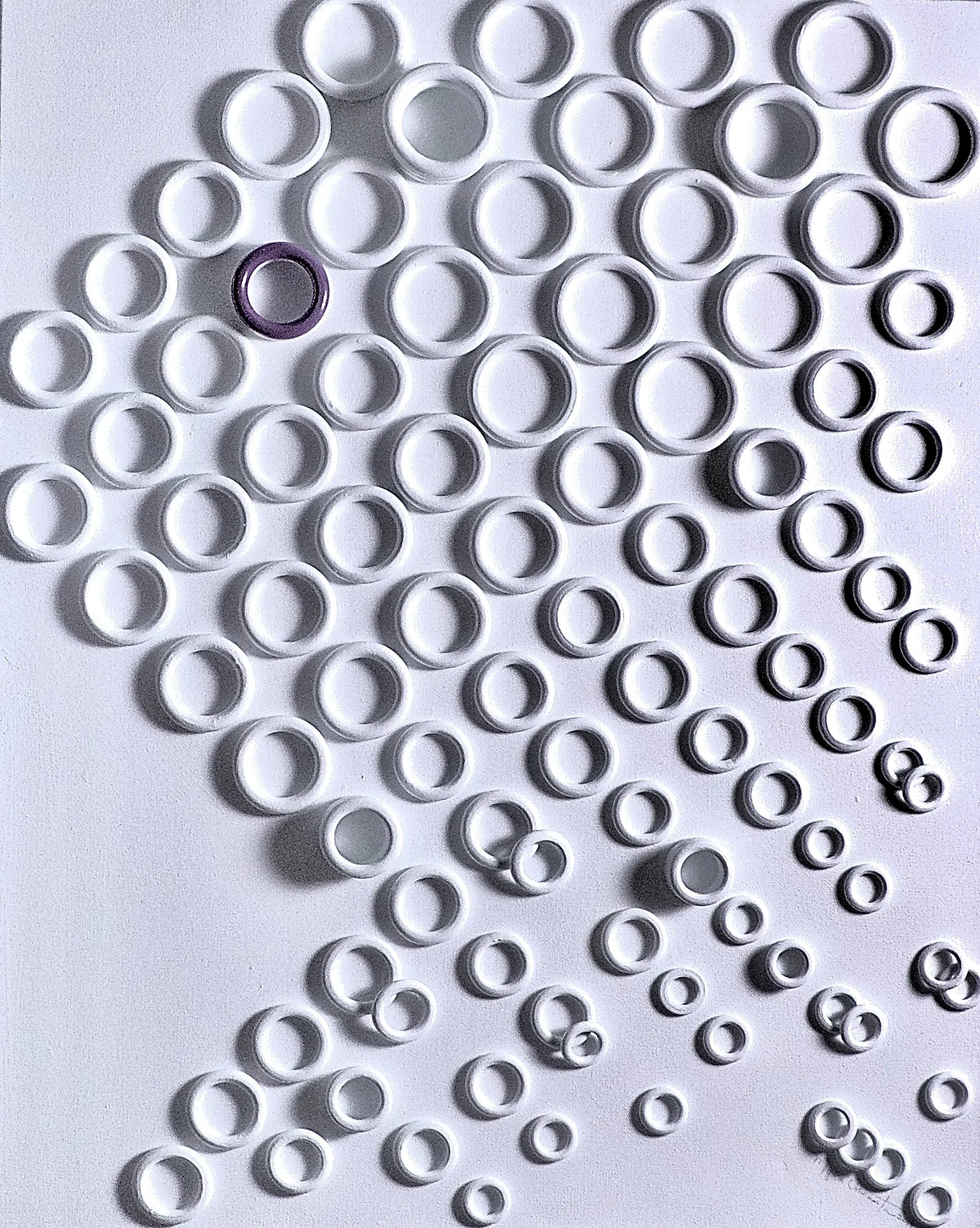
“Cherish the Simple Moments in Life”
Ring Toss by Myrna Urmanita. ©2019 Myrna Urmanita. All Rights Reserved.
Acrylic mixed media on canvas. 24” x 36”. This work was regrettably discarded due to a storage mishap in 2021.
The ring toss game, with its tiny victories and playful chaos, reminds me how important it is to cherish these everyday moments. When life feels heavy, it’s often the ordinary things—the ones we almost overlook—that carry us through. The laughter of my children as they tried to land their rings, their voices filled with delight, is a sound I’ll take with me forever.
Gratitude is more than saying “thank you” for the big things.
It’s the quiet awareness of what we already have—the people, the moments, the memories that shape our days.
When I’m reminded of life’s fragility, I often find myself returning to those small, sacred scenes: carnival games, sticky fingers, laughter that felt like sunlight. The game of ring toss, in all its simplicity, became a symbol of those memories—of everything fleeting, and all that endures.
Children have a beautiful way of teaching us how to live—how to play, how to appreciate, how to be in the moment. Their joy is contagious, and their sense of wonder — a quiet invitation to slow down and celebrate the small things.
“Ring Toss” is just that—a gentle reminder to hold close life’s simplest joys.
To laugh.
To play.
To notice.
And to treasure the moments that matter most.
- Painting #5 -
SUTIKKU
The Power of Connections
One of the words I remember growing up in Okinawa was the Japanese word for sticks, “Sutikku.”
When I began creating this piece, I wanted a visual way to express the love, prayers, and unwavering support I’ve been blessed to receive from my family, friends, and medical team throughout my cancer journey. Each stick on this blank canvas represents more than just a material object. It embodies the strength, encouragement, prayers, and compassion that surrounded me when I needed it most.
When life presents its challenges, there is nothing more comforting than the presence of loved ones and a dedicated medical team. The gentle reassurance of family and friends helped steady my emotional balance and calm my anxiety, even on my worst days.
I am grateful for the doctors, nurses, technicians, and every person who offered their skills and genuine care. They were professionals and pillars of strength during one of the most challenging times of my life.
Through every step of uncertainty, their presence brought peace and reminded me: I was never alone.
Their steadfast love and care were my lifeline.
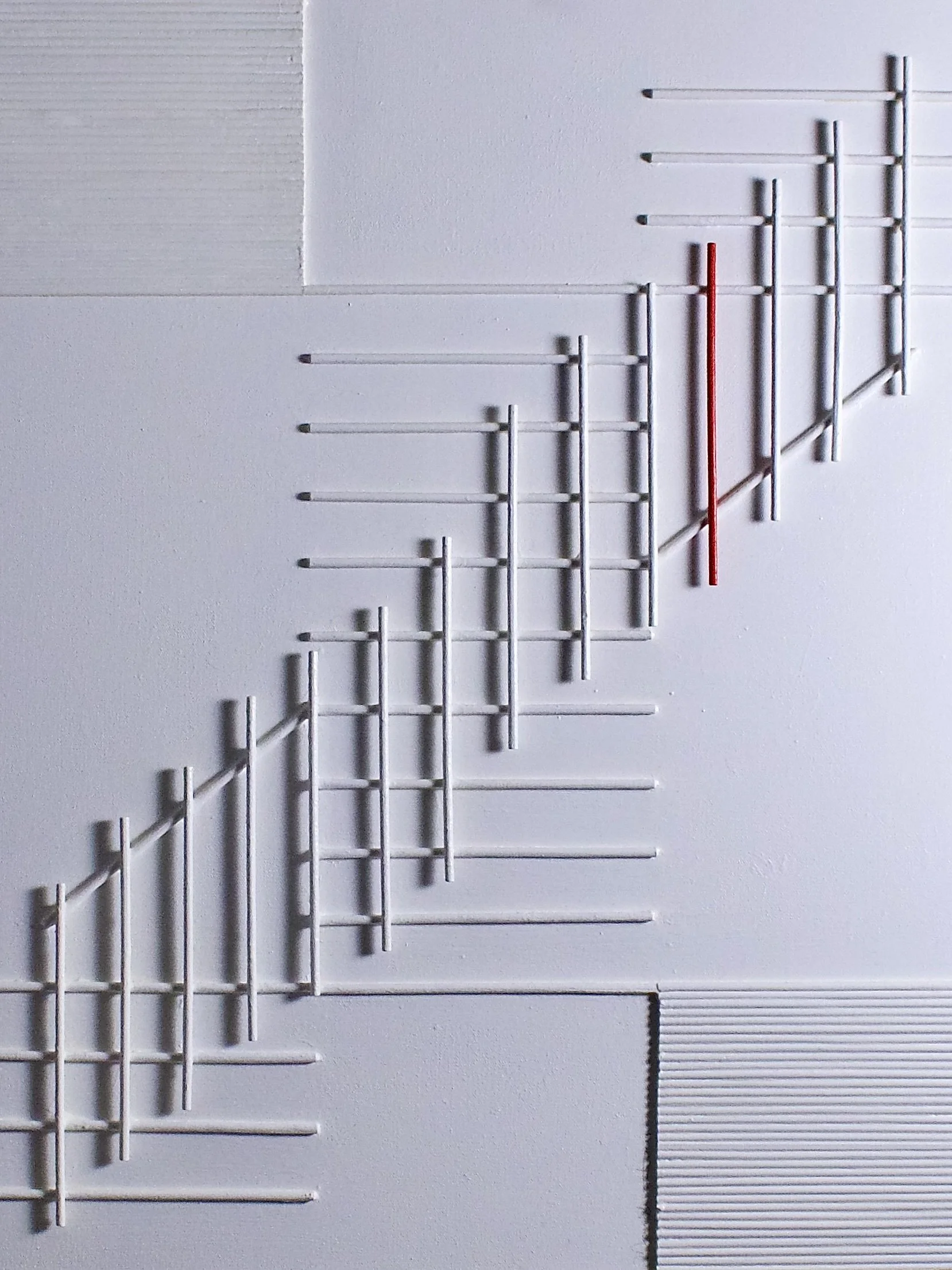
“The Power of Connectiions”
Sittuki by Myrna Urmanita. ©2019 Myrna Urmanita. All Rights Reserved.
Acrylic mixed media on canvas. 24” x 36”. In a private collection.
“Sutikku” is my way of honoring the hope, prayers, and kindness that carried me. It is a visual tribute to the circle of support that held me up, lifted and grounded me, reminding me of the strength and beauty of connection.
- Painting #6 -
DOTING DOTS
Marking the Invisible
Before beginning radiation therapy, I went through a preparatory stage known as simulation. It sounds clinical—and it is. My body was carefully measured, positioned, and marked with tiny permanent dots. These radiation tattoos, though barely visible, were deeply significant. Their role was vital: to guide the machine so that, day after day, the treatment would target the same precise area, attacking the cancer while trying to spare the healthy tissue.
They may appear to be simple dots, but they are anything but ordinary. They are quiet witnesses to what I endured, etched into my skin as permanent proof. No way to erase them. No way to pretend it didn’t happen.
Then, I didn’t fully grasp how symbolic they’d become. Lined up like breadcrumbs across my chest, they were not just marks for machines to follow—they were evidence. Beneath those tiny dots lay a hidden world of fear, strength, and unspoken hope. While I couldn’t see what the radiation was doing inside me, the machine could. It read the map that had been drawn on my chest and followed it with unwavering focus.
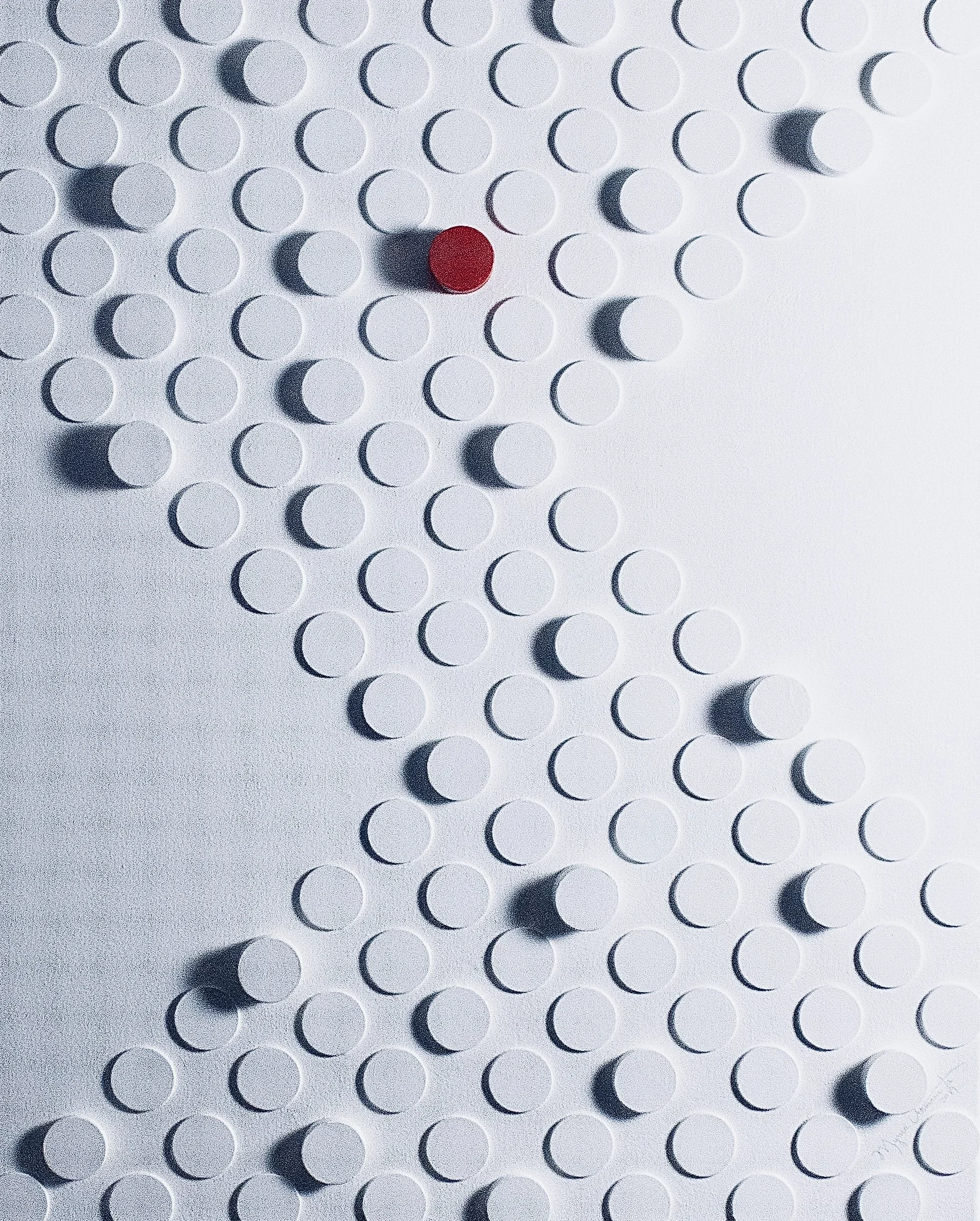
“Marking the Invisible”
Doting Dots by Myrna Urmanita. ©2019 Myrna Urmanita. All Rights Reserved.
Acrylic mixed media on canvas. 24” x 36”. In a private collection.
Radiation was relentless. Every day, five days a week, I returned to the same cold table, the same hum of the machine, the same routine. My skin eventually showed signs of strain—burning and tenderness. The red dot in the painting reflects that heat, that rawness. It reminds me not only of my quiet fear but of how much I was willing to endure to heal.
These small permanent dots, often overlooked, remind us of what we cannot see: courage, resilience, and the will to move forward.
We all carry our invisible marks—moments that have shaped us, scarred and ultimately strengthened us. “Doting Dots” is not just about treatment; it’s about transformation.
- Painting #7 -
WAVELENGTH
Invisible Power
Everyone has heard the word “radiation” in the context of cancer treatment, but I never fully understood its meaning—until I became a patient myself. I had no idea what it would feel like, physically or emotionally.
What I'm about to share sounds sterile and clinical, but in reality, it's powerful. Chemotherapy and radiation are both used to treat cancer, but they differ in delivery.
Chemotherapy uses drugs to kill cancer cells, but it primarily targets rapidly dividing cancer cells throughout the body. Radiation therapy uses high-energy beams to target and destroy cancer cells in a specific area.
My breast cancer was estrogen-driven, so my doctors preferred using the combination of radiation and hormonal therapy. It offered a more targeted approach in destroying the residual cancer cells after my surgery, focusing on the breast tissue and surrounding lymph nodes, and in reducing the risk of recurrence and overall tumor control.
The most common type of radiation used to treat breast cancer is External Beam Radiation Therapy (EBRT). EBRT uses a linear accelerator (LINAC) to direct high-energy beams—X-rays or protons—at the affected area from outside the body. The goal: to damage the DNA of cancer cells, so they can no longer divide or spread.
For five weeks straight, at each session, I lay on a cold platform, watching as the machine’s robotic arm hovered above me, rotating silently, delivering treatment from every angle. It looked like something out of a science fiction movie. But this wasn’t fiction. This was my life.
After the machine and I were aligned to their satisfaction, the technicians would leave the room. The room would be empty. And I would be alone, just me and the LINAC. Behind a large protective window, they monitored everything at a safe distance. And I lay still, trying not to breathe too deeply, clutching a tissue in my right hand—my small comfort in the absence of a hand to hold.
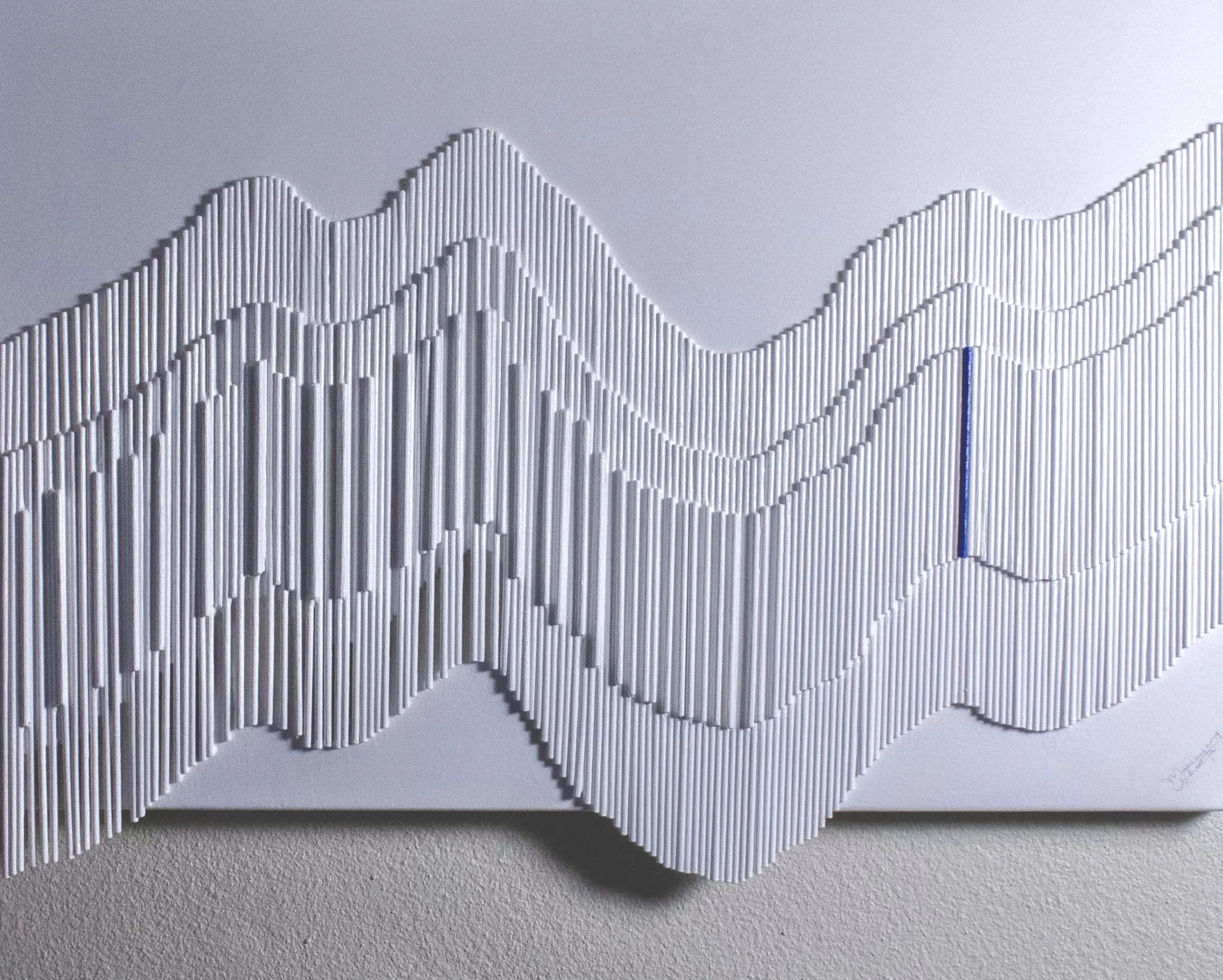
“Invisible Power”
Wavelength by Myrna Urmanita. ©2019 Myrna Urmanita. All Rights Reserved.
Acrylic mixed media on canvas. 24” x 36”. In a private collection.
I never closed my eyes. I focused on a light fixture above me on the ceiling, and I whispered my anchor, again and again, “I can do all things through Christ who strengthens me.” Those words steadied me. I needed them. I leaned on them.
When I think of those twenty-one sessions, I no longer see a cold, impersonal machine. I see something that helped save my life — a robotic hero, fighting beside me.
We all face battles no one else can see, quiet wars waged in sterile rooms, beneath brave faces. But even in silence and stillness, we are never without power.
In “Wavelength,” I tried to capture that invisible battle. Using sticks arranged deliberately on a white canvas, I created a visual rhythm—waves of energy, strength, and resistance. Each stick represents a piece of my armor: belief, conviction, intuition, intelligence, courage, determination, self-image, and self-expectation. Together, they form the energy field that still surrounds me.
This is the frequency I’ve chosen to live on — a strong, steady wavelength that declares: This cancer will not return.
- Painting #8 -
NORDIC FLAIR
A Glimpse of Joy on the Horizon
Whenever my daughter traveled for work, I hung on every word as she shared stories of bonding with colleagues in Sweden and plans to explore neighboring countries like Norway and Finland. Her tales transported me—I could see her walking cobblestone streets, sipping coffee under pale Nordic skies, her laughter echoing through unfamiliar towns.
“Nordic Flair” was born from those conversations. With my artist’s eye and romantic heart, I pictured snow-capped mountains cradling charming Swedish chalets adorned with gingerbread trim. The scenes came alive—soft, crisp, and serene. Visiting such places sparked joy and stirred something hopeful.
What better way to capture that sense of joy and anticipation than with yellow, the color of sunlight, warmth, and blooming fields? Optimism and belief in brighter days are vital parts of healing. I’ve learned that hope can be a remedy all its own.
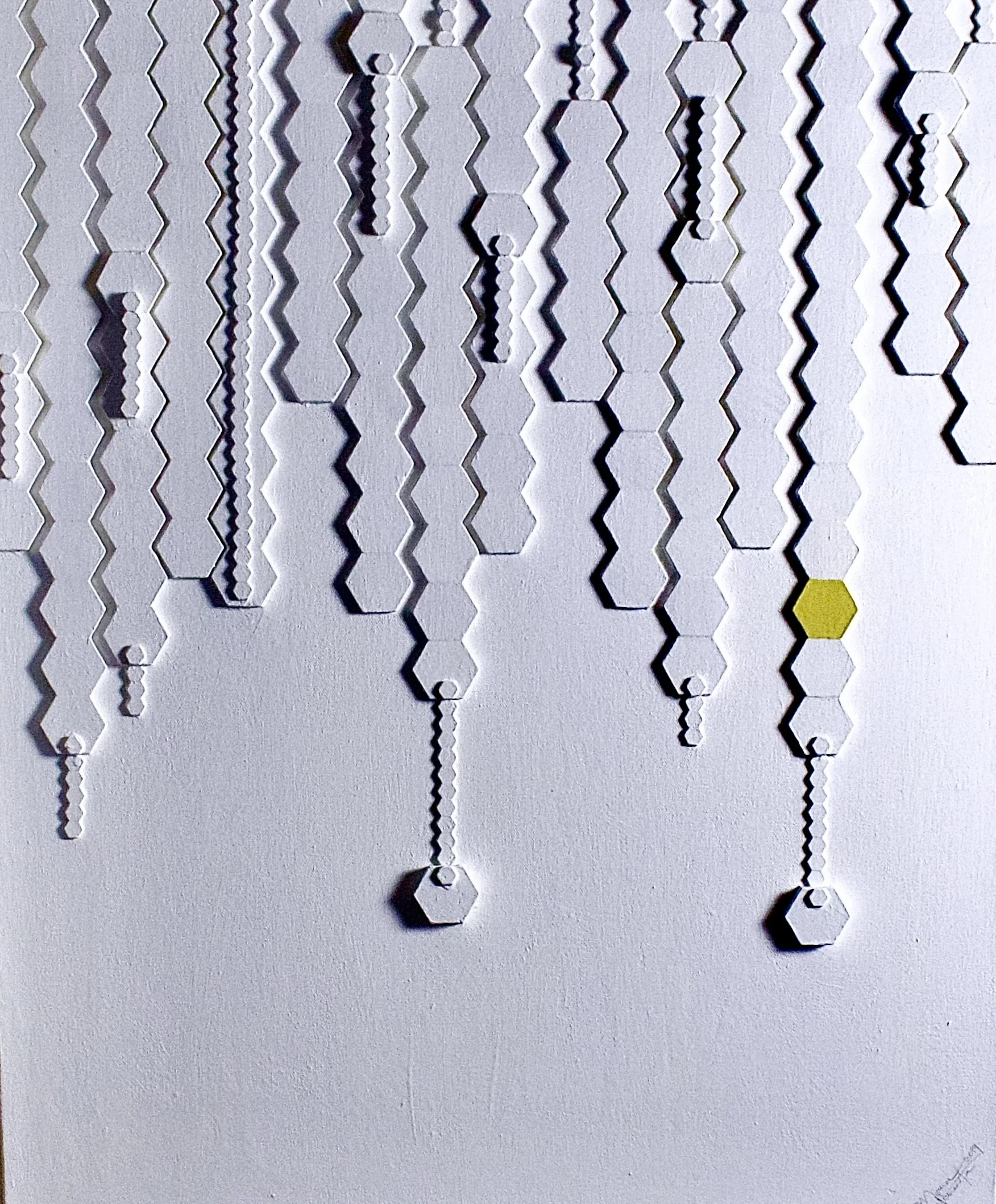
“A Glimpse of Joy on the Horizon”
Nordic Flair by Myrna Urmanita. ©2019 Myrna Urmanita. All Rights Reserved.
Acrylic mixed media on canvas. 24” x 36”. This work was regrettably discarded following a storage mishap in 2021.
“Nordic Flair” is a celebration of joyful imagining. It’s about believing in the beauty of things yet to come, letting your spirit lift toward possibility, and allowing even a passing story to inspire light, color, and hope.
Sometimes, it’s not just the places we travel to but the people we love who carry us there, through the stories, dreams, and joy they spark in our hearts.
“Nordic Flair” is my canvas of that joy: a portrait of happiness painted in yellow, harmonious with the white landscape—great expectations— something magical.
- Painting #9 -
BUBBLY
Laugh and Move On
"Laughter is the best medicine." We've heard this said, but it does not cure. Any form of adversity brings incredible stress, and laughter brings temporary relief. But sometimes a temporary break from stress is all we need to help us see brighter days ahead.
When I began creating “Bubbly,” I had my granddaughter in mind because she loved dots. Dots reminded me of bubbles and always made me happy. Young and old enjoy blowing and watching the bubbles float away. They evoke pure joy—adults delight in pleasant childhood memories, and the young delight in childlike wonder.
“Bubbly” captures the essence of humor and resilience, the positive optimism I held onto throughout my cancer journey. Looking back, humor played a subtle role, although I wasn’t aware of it.
My faith has always played a major role in my journey, and I have kept it close. It is a gentle reminder that, regardless of how I may plan the creation of my paintings or my life, it is my deep conviction, my wavering trust in God that comforts me.
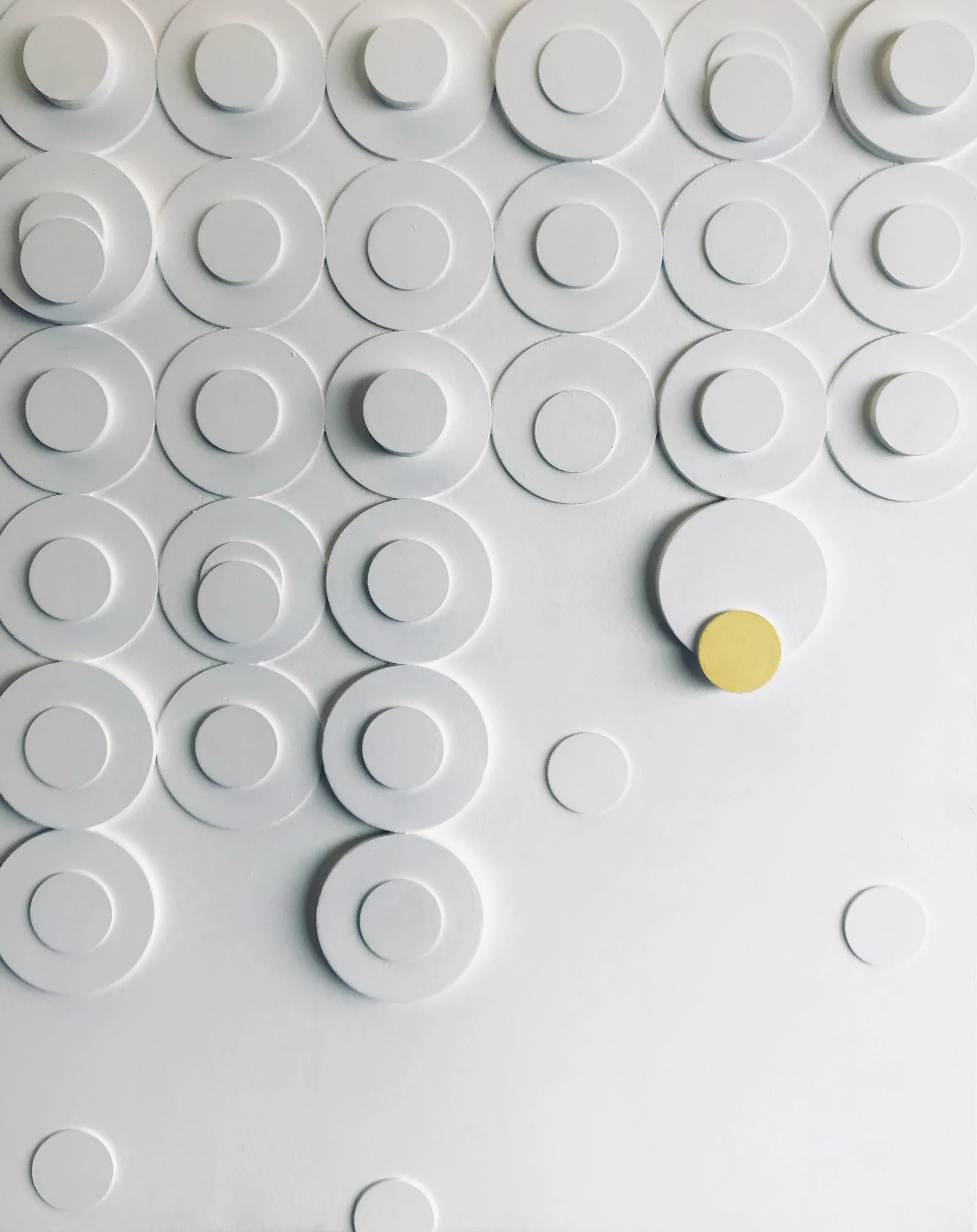
“Laugh and Move On”
Bubbly by Myrna Urmanita. ©2019 Myrna Urmanita. All Rights Reserved.
Acrylic mixed media on canvas. 24” x 36”. This work was regrettably discarded following a storage mishap in 2021.
In this piece, I placed bubbles floating in a sea of white, but an unexpected twist happened. I laughed when I realized the painting also included an element I never intended. The bubbles looked like breasts. Perhaps a subconscious act on my part? A reminder that sometimes, our creations can surprise us just as life does. Or maybe just God’s sense of humor at play.
I painted one disc yellow because I ran out of other colors. It seemed insignificant at the time, but it was meant to be. Yellow is often associated with happiness and humor, especially in Western cultures, but it can also signal danger in the animal kingdom. This contrast means our subconscious affects our decisions before we consciously realize it.
It doesn’t matter whether you see bubbles or breasts in “Bubbly” or if you see the yellow as danger or happiness. What matters is to keep a positive outlook and laugh. It won’t make the challenge disappear, but you’ll definitely feel better.
“Bubbly” is about laughing in the face of adversity —uplifting your spirit —inspiring everyone around you—so you can move forward.
Life’s surprises. How do you deal with them?
- Painting #10 -
WHEEL AROUND
Wheels of Freedom
My youngest brother and I were diagnosed with cancer around the same time. While I have been cancer-free for ten years, he has been gone. My life anniversary is his death anniversary.
After his terminal diagnosis, his cancer progressed quickly, and so did his pain, eventually robbing him of the ability to walk. His wheelchair provided mobility, postural support, and a semblance of independence. It was heartbreaking to see him this way, and I struggled with self-imposed guilt, wishing it had been me instead of him.
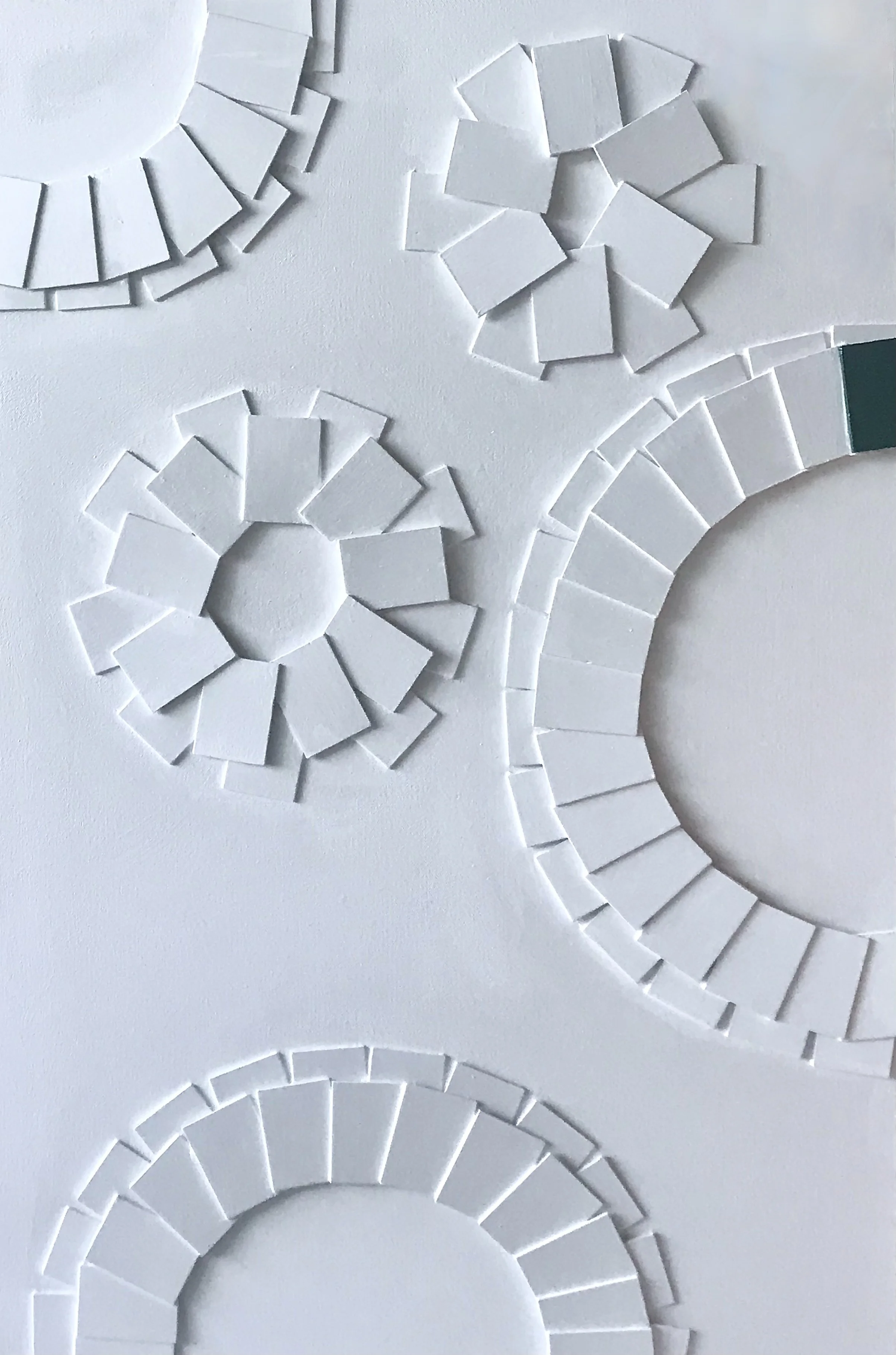
“Wheels of Freedom”
Wheel Around by Myrna Urmanita. ©2019 Myrna Urmanita. All Rights Reserved.
Acrylic mixed media on canvas. 24” x 36”. This work was regrettably discarded due to a storage mishap in 2021.
After his death, I turned to my art to ease my self-guilt. I imagined a safe place where his wheels roamed free.
“Wheel Around” is dedicated to my brother and many others like my brother. A place where they could feel the joy of movement again, unencumbered by the physical limitations that their disease confined them to—a happy place where they could be free and whole again.
- Painting #11 -
SCALES
Armour of Protection
How do you protect yourself from adversity, unexpected danger, or illness? Unlike humans, fish have scales—small, rigid plates that grow out of their skin, offering protection and other benefits.
Facing an illness that threatens your mortality demands resilience and adaptability. You navigate through the trials, accepting and adjusting to your new reality without surrendering to fear. In my journey with cancer, I found strength in my personal beliefs and values—God, faith, prayer, and hope.
This inner strength served as a crucial support system, helping me safeguard my emotional, mental, and physical well-being against the challenges and uncertainties brought by the illness.
After being cancer-free for ten years, I can attest to the profound transformation I have experienced. This journey has reshaped my life and reinforced my resolve and inner strength.
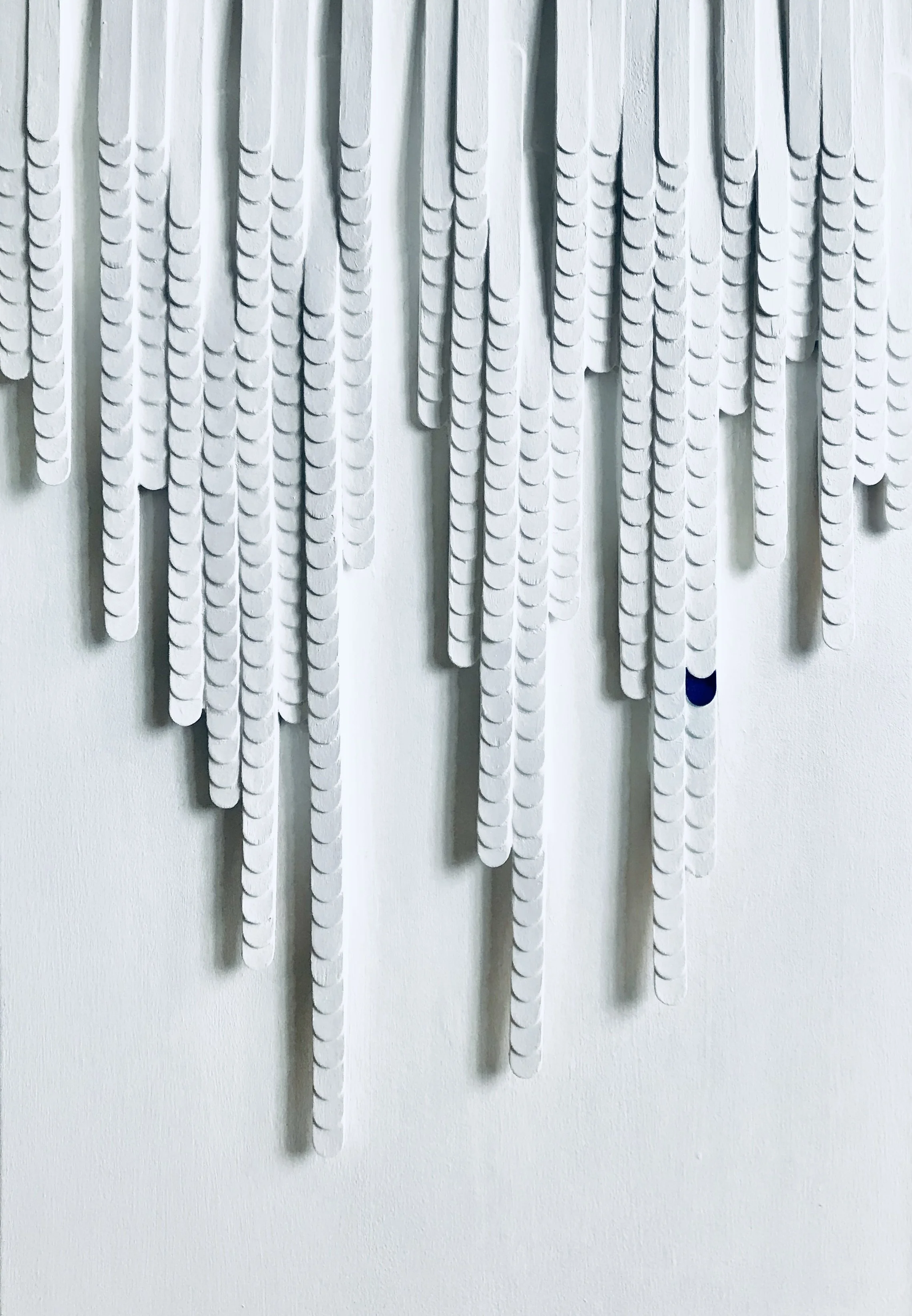
“Armour of
Protection”
Scales by Myrna Urmanita. ©2019 Myrna Urmanita. All Rights Reserved.
Acrylic mixed media on canvas. 24” x 36”. This work was regrettably discarded following a storage infestation in 2021.
“Scales” is a mixed-media piece that visually explores the concept of protection, resilience, and adaptation we build as we navigate adversity.
With layers of wood tongue depressors, each layer mirrors our emotional, mental, and physical fortitude—defense mechanisms fighting illness and hardships. The scales are the protective layers we create, whether through personal strength, support systems, or inner resolve, to shield ourselves from fear and uncertainty.
“Scales” embodies the transformation and strength that have become integral to my life.
- Painting #12 -
TRIPPING CORNER KEYS
White Coat Syndrome
I remember it was a beautiful sunny day. I had just stepped outside after completing my last treatment. I should have emerged victorious, but I didn't. My last day of treatment, my second chance at life, was my brother's last day of life. I found myself facing internal dilemmas. I had survivor's guilt.
So it was in the beginning. Later, as the years passed, a new worry took root. Despite my desire to move on and my doctor’s assurance that I was okay, a new fear lingered. Every visit to the doctor’s office raises my blood pressure and reawakens countless anxieties. It has a name—White Coat Syndrome.
The cause of White Coat Syndrome is unknown and differs with each case. With me, it’s the stress and anxiety of the cancer returning. Once I had been diagnosed with cancer, I had a heightened awareness of it returning.
Cancer transformed my sense of identity—how I saw myself. I struggled, feeling vulnerable with a compromised immune system, and reevaluated my values and priorities in life.
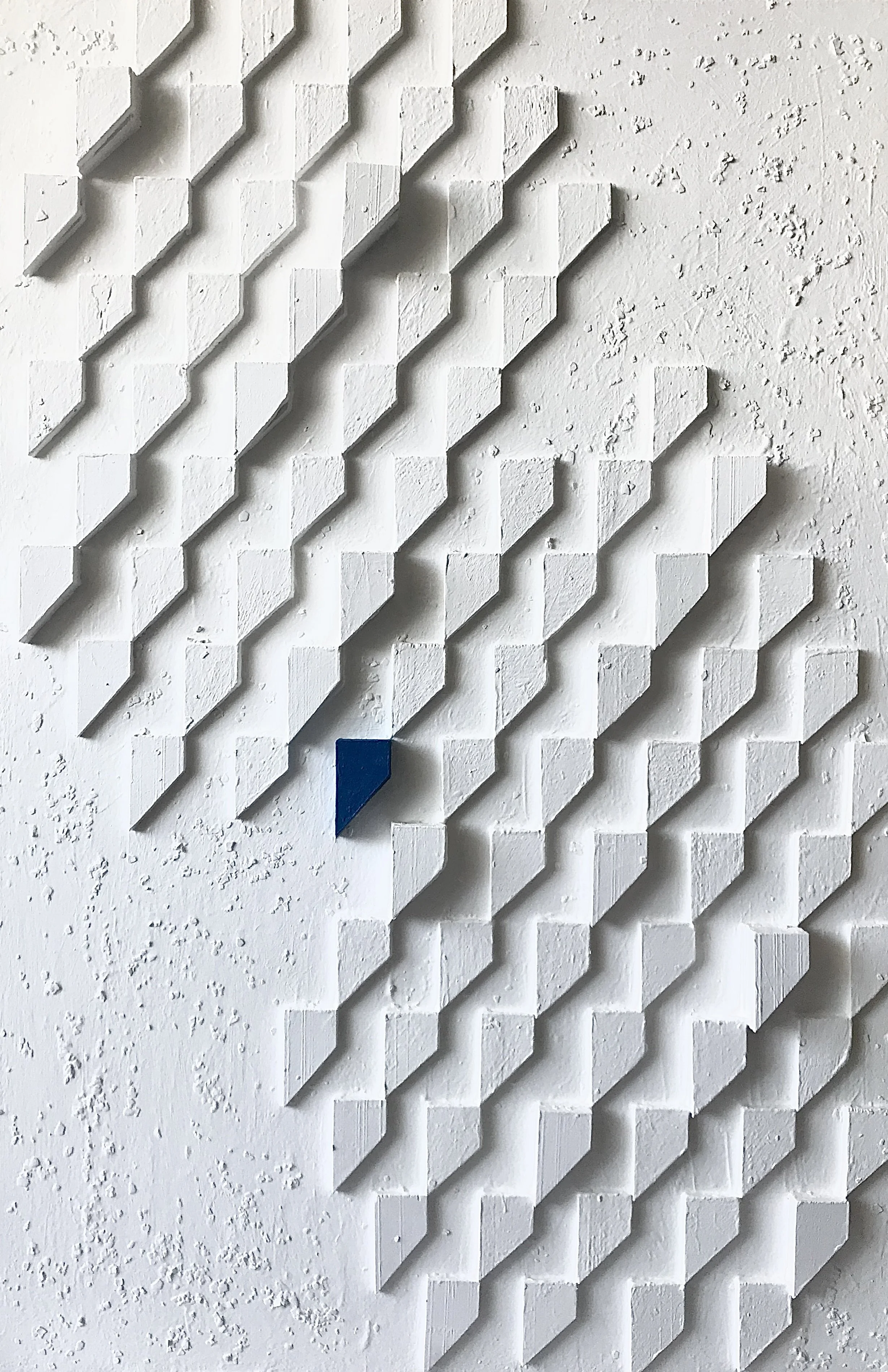
“White Coat Syndrome”
Tripping Corner Keys by Myrna Urmanita. ©2019 Myrna Urmanita. All Rights Reserved.
Acrylic mixed media on canvas. 24” x 36”. In a Private Collection.
In “Tripping Corner Keys,” I used the small wood corner keys for my canvas frames. These small tightening keys or wedges are used as shims to adjust the tension on the canvas stretched on a wooden frame. They keep the canvas taut to prevent sagging.
I stacked the corner keys in rows to reflect the continuous chaos and struggle I feel with every medical appointment. Like many cancer survivors, even long after the diagnosis and treatment, I grapple with the fear of recurrence.
But anchored in faith and hope, I focus on my well-being and live fully. Losing my brother to cancer inspired me to find strength and resilience in my journey and led me to a greater appreciation for living my life — because he could not.
“Tripping Corner Keys” reflects this perspective. Amidst the disorder of my new normal, I refuse to be tripped up by negative thoughts about my mortality. Instead, I seek peace of mind. I am that one blue corner key, standing steadfast with resolution and affirmation—I reject a relationship with uncertainty. I choose gratitude, faith, and life.
Thank you for walking this journey with me.
These paintings marked the beginning. The unfolding continues in my stories that follow.