
Author’s Note
One morning, while I sat enjoying a cup of tea, I read a social media post that disturbed me all day. This next story is a work of fiction inspired by that post.
That post implied that if a person says they are going to write a book, they must already be well-read, market-aware, and fluent in industry trends—otherwise, their work should not be taken seriously, trusted by professionals, or considered publishable.
On one hand, I agree that reading matters. However, creativity does not require a gatekeeper—as an artist, I truly believe this.
There are many paths to storytelling. Some follow well-worn roads. Others wander off the beaten path—and still have merit.
Artistic expression today often bends under commercial pressure. Writers who create from lived experience are frequently told they must conform to thrive. But art and writing are not born from market trends or industry approval. They are born from loss, reckoning, love, survival, and the need to make meaning.
Not all readers are concerned with competitive advantage or genre popularity. Some read because a story is emotionally honest—because it whispers something true to their hearts.
Artists create. Writers write. We do it with soul.
I write from my heart, driven by a desire to connect, so that my life experiences might touch and help others.
In this story, “No Is Not the End,” Yara, a writer, confronts the quiet harm of believing she needed permission to claim her voice.
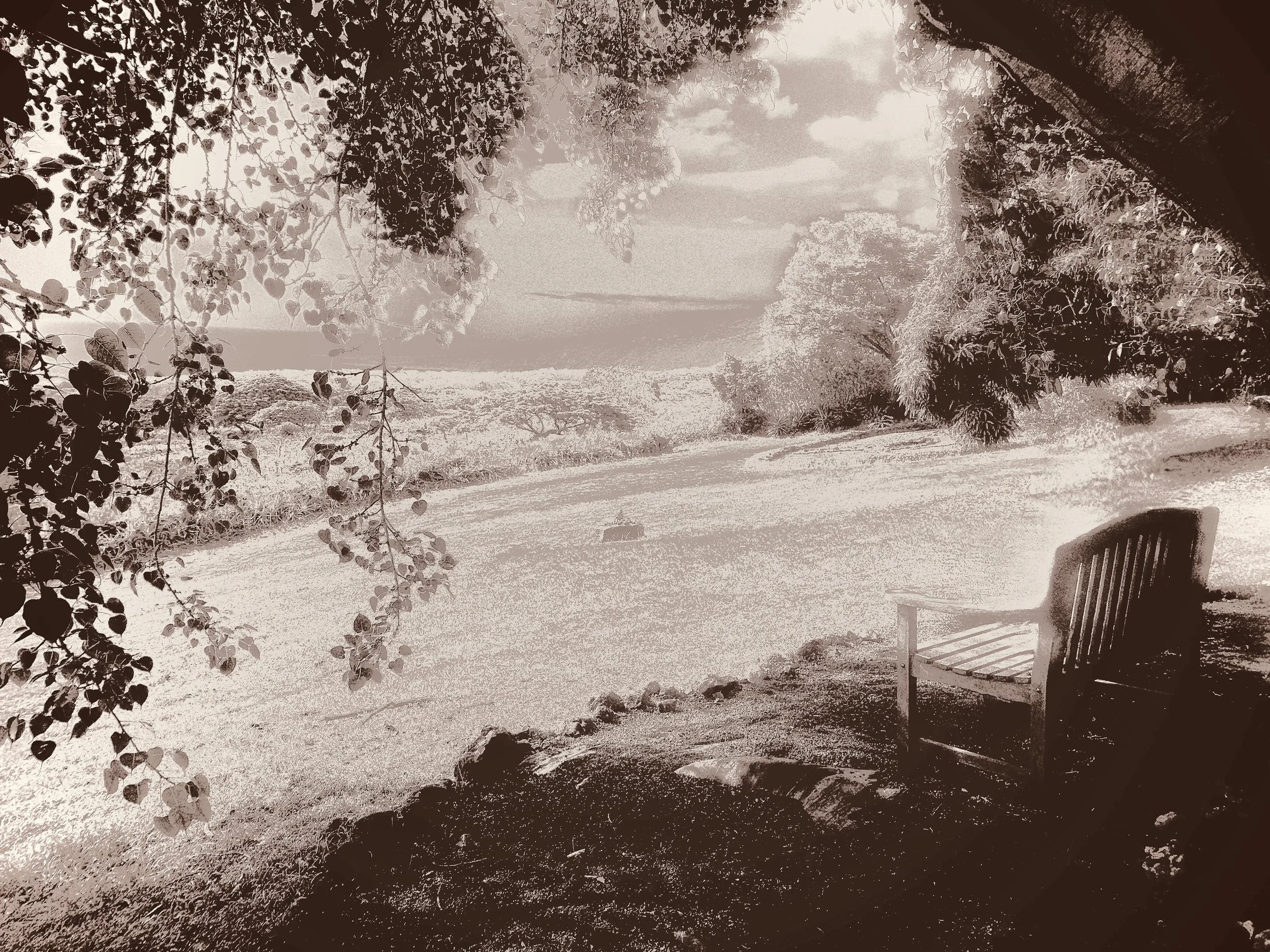
©2025 Myrna Urmanita. All Rights Reserved.
No Is Not The End
“You want to be a writer? You’re going to starve.”
Yara sat at her desk, sniffling, as she typed those words into her laptop. They had haunted her for years, and she cringed with every letter she pressed into place.
She was seventeen when she told her father she wanted to be a writer. What should have been a moment of excitement—of possibility—became a memory that refused to loosen its grip.
“You want to be a writer? You’re going to starve,” her father had said, his voice low and certain.
The certainty was what stayed with her.
Now, decades later, Yara sat frozen at her desk, her stomach tight, her thoughts drifting backward—searching for the moment her life had quietly turned.
“Grandma, you got mail!” her granddaughter called from another room.
Yara pushed her chair back and made her way into the kitchen. A small stack of envelopes waited on the counter. Her granddaughter rushed past her, already halfway out the door.
“Bye, Grandma. See you later!”
Yara thumbed through the mail slowly, bracing herself. She wondered if there would be another rejection—another professionally worded dismissal.
She knew those letters well.
“We regret to inform you…”
Each time she read those words, they reopened the old wound, her father’s voice echoing beneath the polite language.
Yara had lived with the consequences of that moment at seventeen. She built a full working life—long commutes, two jobs, sleepless nights. She raised her children alone. Writing was something she carried quietly, like a secret she didn’t quite deserve.
There was never time.
Sometimes she wondered if her younger self had absorbed her father’s certainty too deeply.
Did I hinder my own potential? Did I sabotage small successes before they could grow? Was I afraid of success—so afraid that I chose failure instead?
She told herself she was an elder storyteller now. Someone whose stories belonged in kitchens, at sickbeds, with grandchildren, or shared quietly with strangers. Not on bookshelves. Not out loud.
Her father’s words had become a barrier—one she rarely questioned. She wanted to write, but she doubted herself. She believed she lacked the right background, the right training, the right permission.
She tried anyway.
She wrote stories shaped carefully to fit popular genres and market trends. She checked the boxes. She followed the rules. And each time, the stories came back to her with a rejection letter.
The industry seemed ready. Yara was not.
Then one day, the mail arrived again. This letter was different.
It wasn’t a form response. It wasn’t polished to distance. It simply said: “No — it’s not the end. It’s not yet.”
Yara read the words again. Then again. No one had ever said that to her about her writing. The sentence stayed with her, slowly washing away the old certainty she had carried for so long.
She returned to her desk and reread her stories—deeply pondering, evaluating, and processing.
"What’s missing? I love writing. So why don’t I feel it here?" she murmured honestly.
And then she understood.
She had been writing carefully, but not truthfully. Her stories were technically sound, but emotionally distant. They didn’t carry her love, her loss, her resilience. They didn’t carry her.
Years spent guarding herself against disappointment had hardened her voice. The absence showed on the page.
But when she told stories to her granddaughter—stories spun in kitchens, whispered at bedtime, shared with strangers—they were alive. They were filled with imagination, memory, grief, humor, and hope. They were born from her lived experience.
For the first time, Yara realized she already had everything she needed to write from her heart — not from necessity.
Now, when her granddaughter calls out, “Grandma, you got mail,” Yara no longer braces herself.
Her stomach doesn’t tighten.
She doesn’t trudge.
She trots.
She no longer hears her father’s words.
She hears instead: “No — it’s not the end. It’s not yet.”
The door is still open.
And where she once saw failure, Yara now sees something else entirely.
A work in progress.
—
Some words carry the weight of the future. Words tell the story—but the one who listens lives it.