©2025 Myrna Urmanita. All Rights Reserved.
When Jasmine lost her dad, the hardest part wasn’t her own grief—it was watching her mom navigate life without him. Anxiety had shadowed his struggle with cancer, but what terrified Jasmine most was her mother’s fear—facing a future without the man who had stood by her side for over fifty years.
She watched helplessly as her mom interacted with family and friends. Their comforting words barely touched the depth of her sorrow. Even Jasmine fell into that trap. The ache. The uncertainty. She could only imagine.
Years earlier, Jasmine had felt heartbreak when a college relationship ended abruptly—the sting of her own loss. Compared to her mother’s grief, hers was only a hushed reflection. Love hurts in many ways, she realized.
Her mother’s sorrow was not just emotional—it was spiritual, a point of no return that reached beyond loneliness. Fifty years together had woven deep interdependence; the house echoed with silence. And yet, beyond the quiet, the greater challenge emerged: reclaiming her identity.
The day he passed, her mother’s new journey began. Fifteen years alone followed, sustained by faith and family.
Her parents had shared a love of gardening. Her dad tended vegetable beds and fruit trees with devotion; her mom nurtured every bloom, especially the ones needing saving. She always came to their rescue.
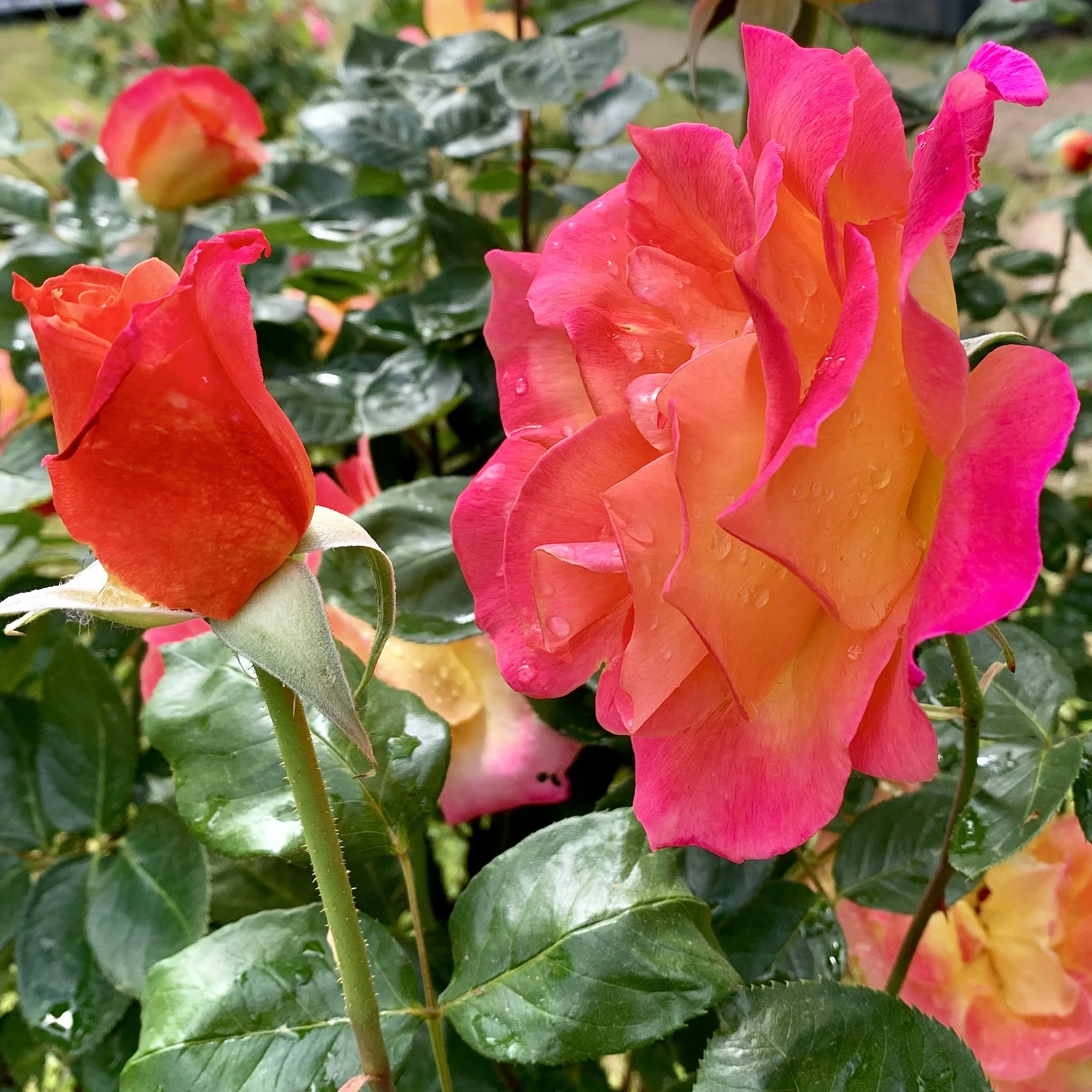
She tended orchids, roses, and hydrangeas with quiet love. The orchids floated beneath the covered patio, their blooms drifting like delicate angels in the morning light. Tall rose trees lined the driveway, standing sentinel as their blossoms reached for the sun. Clay pots overflowed with hydrangeas, a riot of color guiding visitors toward the front door.
Her mom was meticulous about her plants—and her home. While never diagnosed, the family suspected tendencies toward obsessive neatness.
Every carpeted room bore area rugs she straightened, tassels aligned perfectly. Drapes fell parallel to the floor; sofa pillows sat just so. Every doily—of which there were many—was fussed over until it was right.
Evenings after dinner, the kitchen transformed into a field command center. Dishes washed, dried, counters cleared, sink gleaming. Without a word, her ritual declared: the kitchen was closed.
Of course, her dad never obeyed. “I want ice cream!” he’d call, and the kids would laugh, raiding the freezer, knowing she wouldn’t scold them this time.
“Wipe the sink!” she’d call from another room, voice firm but touched with affection.
These moments—brief breaks in rigid order—made everyone laugh. The calm before the storm returned.
As children, Jasmine and her siblings had been disciplined like recruits. “Every Friday, you come home straight from school and clean the house,” their mother demanded.
No matter how hard they tried, she was never satisfied, silently redoing their work. Their hearts ached for acknowledgment.
Even as an adult, Jasmine still cleaned every Friday evening like clockwork.
With time and her dad’s help, she came to understand her mother’s past. The fourth of eleven children, given away at twelve to a pious, childless aunt. Faith became her refuge, her anchor—a lifetime built on prayer, godly fear, and obedience.
Her mother may have lacked warmth inside, but to others, she was a petite, flawless woman, always impeccably dressed, greeting everyone at church with a sweet smile.
Jasmine remembered the first time she heard her mother praying. She was seven, assuming her mom was working in the kitchen when a soft murmuring drifted down the hallway.
Curious, she walked slowly, floorboards creaking with each step. She leaned into the slightly open door.
Her mother sat on the bed, back straight, shoulders tense. The afternoon light slanted through the blinds, cutting sharp lines across the room. Dust motes drifted lazily in the beams.
Jasmine’s gaze followed the rosary beads slipping through slender fingers, deliberate, measured. Each movement carried a rhythm she had never noticed.
Her lips moved in a whisper, almost drowned by the hush of the house. Hail Mary… full of grace… The words lingered in the air, mingling with the faint scent of orchids from the garden.
Her chest tightened. She had never truly seen her mother like this—small, fragile, yet utterly absorbed in something larger than herself.
Time held still. Jasmine didn’t breathe, afraid to break the sacred rhythm.
A subtle exhale. Her mother’s hands rested in her lap. The rosary glinted in shifting light. In that quiet frame, Jasmine understood: this slow ritual carried the weight of a lifetime she had only begun to grasp.
Her eyes scanned the room. Candlelight flickered across the altar, shadows dancing over statues of Jesus and Mary. Lips moved silently; beads slipped through fingers like water over stones.
She stood transfixed, mesmerized by the quiet, holy moment.
Though raised in devout faith, Jasmine and her siblings eventually found their own paths. Their mother’s upbringing—cold and joyless—had taught fear, not tenderness. She had loved, but not known how to show it.
Returning from college, Jasmine would hear her mother’s familiar restraint. “You’re home. Did you eat?” Arms hanging limply, Jasmine hugged her.
Grandchildren remembered the same fastidiousness and stern rules. “Don’t run in the house. If you break my knick-knacks, Grandma’s going to spank you!”
“Leave them alone—they’re just having fun!” Grandpa would growl back, defending the kids.
“The grandkids survived because of Grandpa,” Jasmine would say, smiling. “He gave hugs, chased them around the garden, made breakfast, played hide-and-seek.”
After her father’s death, the armor protecting her mother’s insecurities began to crumble. He had been her shield. Without him, vulnerabilities were laid bare. She struggled, yet never succumbed to despair.
“I’m strong,” she declared one afternoon. “I knew I could live my life by myself. I bought this house, moved, and made it my home. My friends couldn’t do it—but I did.”
Jasmine laughed softly. Supporting her mother brought the siblings closer, deepening compassion for the woman they had once found so hard to understand.
Those experiences—rigid order, restrained emotion—became the stories that bound the family together.
Her mother’s inner strength, unwavering faith, and her family carried her through. She managed her home and affairs with independence and dignity until frailty appeared in passing years.
One afternoon, as Jasmine sat at the kitchen table, she watched her mom balance her checkbook. Suddenly, her mother slid it across the table.
“Here—you do this,” she said, flustered. “I don’t want to do it anymore. It’s too hard. You pay the bills.”
In that moment, Jasmine realized her mom was entering another chapter—one of gentle surrender.
Later, they moved into the garden. Her mother bent over the orchids, arthritic hands moving with quiet precision.
Jasmine watched, holding her breath, feeling tenderness swell inside her. The same hands that once demanded order were now nurturing life in quiet, slow rhythm. Her devotion, once mistaken for control, revealed itself as love.
The moment was bittersweet—sadness for the years of misunderstanding, joy for the healing that was finally blooming between them.
As she pruned the hydrangeas, Jasmine thought about the past—the hostilities, the indifference to her emotional and social needs, the times she felt invisible. She realized how much time she had spent focusing on what was missing, instead of embracing what remained. Her mother’s recent plea for help with the bills had been, in its own way, an expression of trust and love.
It was then she understood: she had been grieving the mother she wished she had, rather than loving the mother who was still before her.
When her mother passed away, Jasmine’s grief became proof of love—the love that had survived everything imperfect between them.
She honors her mom now by remembering that it’s possible to love someone who was not perfect. The struggles and imperfections are part of her mother’s story—and part of her own.
And the roses, orchids, and hydrangeas will go on blooming, carrying her mother’s legacy in every petal. 🌺
—
Some things, sometimes, sit quietly in front of us, until they reveal themselves—but only when we are ready.